Data Confirms: Apps + TV = :(

February 13th, 2012
by Jeremy Toeman

Research firm Xyologic released a bunch of statistics about Google TV today.  And those statistics point squarely at the amazing lack of app installs on the platform.  Granted, these aren’t official numbers from Google or anything, but they seem quite believable (except for the whole Napster as #1 app thing, which is just bizarre, but then again, so are apps on your TV).  Here’s the top 10 chart:

Source: RWW

So, people don’t want to download apps on their TVs eh?  I guess I’m going to go with the whole “I told you so” as my commentary (and I wrote that piece well over a year ago).

TV isn’t about apps.  It isn’t about technology.  It isn’t about “interacting.”  And most tech startups seem to want to make it a lot more about apps, technology and interaction.  Which is probably the leading indicator of why most TV-related ventures crash and burn – unfortunately too many of the folks involved are far removed from the typical TV audience.

I’d go so far as to say “TV isn’t about entertainment” when push comes to shove.  I think the best word to use to think about TV is “escape.”

There’s a reason channel surfing still beats out DVR usage, and why cord cutting is still not really a mainstream behavior.  Using your DVR or browsing content lineups is not about “escape”.  It’s about “work”.

The more the industry tries to get people to “work” for simple, enjoyable TV viewing, the more the industry will be littered with failures.  The same is true in the Smart TV space, the Social TV space, the Connected TV space, etc etc etc.  Keep in mind, as it is so very relevant, the concept of the paradox of choice: the more options and “power” you give a consumer, the more you will probably just be frustrating them.  It’s pretty hard to beat the experience of good ol’ TV today, period.

So if you are building a platform, an app, an experience, a gadget, a whatever to “improve” TV, think about the concept: “are you helping people escape?”  If not, it might be time for a “pivot.”

Related Posts:
  • Everyone’s A Data Point
  • USB Key: Phone Home
  • Data Thievery
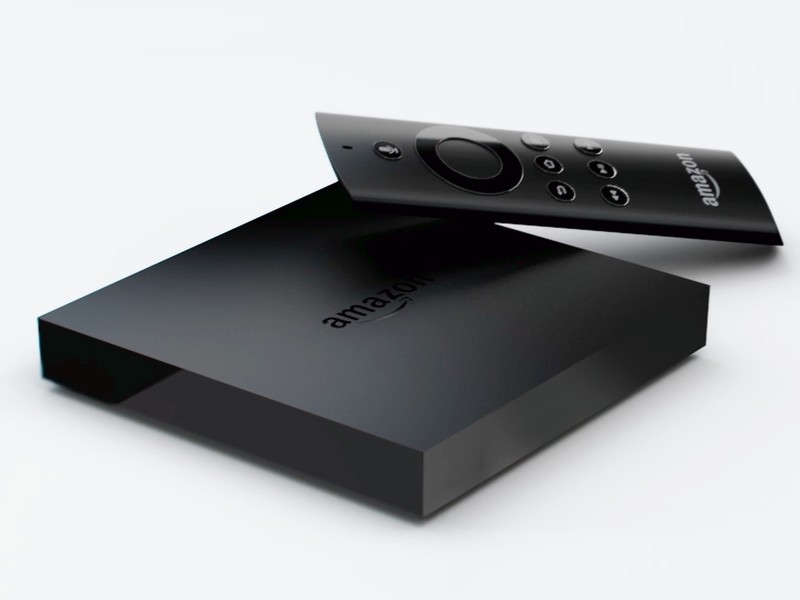
  • Is Amazon Building a Kindle Set-Top Box?

    February 10th, 2012
    by Jeremy Toeman

    I'm awesome at photoshop! I hope it doesn't look like this!

    I’m pretty sure the headline here says it all.  Let’s review the facts (it might be worth re-reading my bit on why HBO doesn’t go direct to consumers, as many of those issues are addressed here):

    1. Amazon has a large content library. They are actively increasing it.
    2. Amazon has a content distribution platform already capable of streaming to non-PC devices.
    3. Amazon has a recurring billing relationship with consumers.
    4. Amazon has a (phenomenal) marketing and distribution channel for getting devices into consumers houses.
    5. Amazon has a strong brand in the hardware space.
    6. Amazon has the customer service & support infrastructure needed to deal with service issues.
    7. Amazon has the ability to build hardware and deal with supply chain issues.
    8. The TV services industry is huge, and Amazon wants in.

    Even if they don’t plan to decouple content from Amazon Prime, making a box is a very viable, and, in my opinion, a likely move.  In addition to all of the above, it is a strong move versus Apple (and possibly Google and Microsoft too).

    A $99 Amazon Kindle TV box would not surprise me this coming holiday season (how about a September launch, right in time for school?).  But then again, I occasionally get Kindle predictions wrong.

    Kinda saw this one coming, didn't ya?

    Oh, and one more thing.  What if they do it by acquiring Roku?  Let’s review that scenario:

    1. Roku already has something better than a minimum viable product.
    2. Amazon could skip all the work on developing a new UI/UX (regardless of your feelings on the Roku UX, it is well more than functional).
    3. Roku isn’t a sustainable business yet, enabling Amazon to purchase at a reasonable price.
    4. Roku has a team with a strong background and industry knowledge relevant to the TV/Device space.
    5. Amazon can distribute the same hardware at the same price point (which seems to fall in the not-too-profitably category), yet supplement with reliable recurring revenue.
    6. Amazon wouldn’t have to drop the Netflix service, but could slowly chip away at it from within.
    7. It’s cheaper than trying to buy Xbox from Microsoft (though that’d be quite the coup, plus nobody would even need to relocate)

    I don’t really think Amazon *needs* to buy Roku, but it would probably let them fast-track a bunch of steps.  And then it could be a $49 Kindle TV, which just sounds so… right.

    Related Posts:
  • Kindle Review: Good but I Prefer Books
  • Where’s the Kindle Used eBook Store?
  • Why Amazon’s Kindle will fail.
  • Path: To Trust or Not to Trust?

    February 8th, 2012
    by Jeremy Toeman

    privacy fail

    In a nutshell: Path, a facebook-like social networking app, recently found themselves in hot water after a programmer discovered they’re uploading your entire address book to their Web servers when you use it.  Mike Arrington’s proposed solution is they should “nuke” all their data (and as disclosure, he’s an investor in the company).  My initial reaction is this is absolutely correct, but doesn’t necessarily address my real concern – moving forward, can I actually decide to trust Path or not?

    I am in the “no photos of my kids on Facebook” camp.  Why?  Because Facebook has demonstrated a fairly deliberate motive to not keep my data private.  The company actually believes privacy is “Dead” so why would they even care about this kind of a thing?  They don’t, and that’s their decision, and since I think privacy is alive and well, I make the (easy) choice not to share anything about my children there (for so many reasons, but here’s one if you need it).  Enter Path.

    When I first tried Path (and by the way, it’s one of the most beautiful apps I’ve seen for my iPhone), it seemed fairly clear they were pretty dedicated to privacy and your “real” social network.  Initially you were limited to 50 friends, and all sharing happened within the confines of the app itself.

    Now, the 50 friends limit is up to 150, the app enables sharing to Twitter, Facebook, and other platforms, and, lo and behold, there’s a privacy fail.

    One can quickly look back to Facebook and say “privacy fail = no big deal”, unless, of course, your value proposition is around privacy!

    As they say, it takes a lifetime to build trust, and mere moments to utterly destroy it.

    Path is at a crossroads.  They must decide what they are, and what their stance on privacy is, and they must do it imminently.  If they want to be “the social network you can trust”, they have that opportunity.  But they are on the verge of squandering it.  Which leaves them as “the social network that’s not Facebook or Google+” and in that mode, I can’t imagine them doing more than just eking it out if they continue down this… wait for it… path.

    I’d love to see Dave Morin (Path’s CEO) use this moment to step up, make a public statement on what the company’s vision is and what they stand for.  I for one hope they don’t choose… poorly.

    Related Posts:
  • Bike Messengers
  • Thoughts on corporate blogging
  • Rappin my Rep
  • According to Lost Remote, social media was en fuego during the Super Bowl this year.  Bluefin Labs contributed to these stats, and found over 12 million “social media comments” during the game.  Another element Lost Remote tracked were the plurality of Social TV Second Screen Apps in play:

    The best second-screen experience: To start things off, we checked into the game on GetGlueMiso,IntoNowShazamConnecTVUmamiFoursquare and Viggle. Ok, that’s overkill, but we wanted to give them a spin on the biggest social TV event of the year. For starters, GetGlue sailed passed its all-time check-in, counting over 100,000 before halftime and 150,000 total for the game, 3X its all-time record (the company doubled its servers for the Super Bowl.) We’re let you know of other second-screen stats when we get them.

    Now that doesn’t include the “official” Super Bowl app, NBC Sports, or a few other options.  But overall, I’m see a glass is half empty scenario myself.

    The problem was in the experiences.  I tweeted a couple of times during the game, by using the Twitter app, which was native and easy to do.  The thought of launching another app, just to get something that would enable be to tweet never even crossed my mind.  In reality, most of these apps actually got in the way of the experience.  And yes, while there was tons of tweeting and updates occurring, I’d lay down a strong bet most of this was about people posting, not reading what others were posting.

    I also found the Super Bowl ads highlighted two major flaws in the ad experience.  Shazam got a lot of pre-game buzz for all their ad partners.  Sounds cool in theory, but the experience is just plain lousy.  First, the commerical starts airing.  Then, at some point in the middle of the ad a little Shazam logo appears somewhere on the screen (I only noticed it a handful of times personally).  At this moment, the viewer must grab their phone, turn it on, unlock it, switch to the Shazam app, and then – and this is important – get everyone in the room to be quiet for 7-10 seconds.  Great in theory, but this is not a good experience for any user.

    The second was a QR code which displayed on screen.  This in my eyes was even worse than Shazam, since QR codes require the user to have a QR app, which is just too obtuse for the average viewer.

    worst. crossword. ever.

    Compare either the Shazam or QR experience to having a simple URL onscreen.  Is it really easier to go through all the hassle and end up on the Honda website, or just tell the user to go to honda.com?  Plus, by obfuscating the simple methods, advertisers lose brand reinforcement AND are busy handing over the experience to a third party.  Similarly, when it comes to social experiences, is it to a consumers’ advantage to launch an app just to get an update into Twitter or Facebook, or to just use the native ones?

    These experiences have come a long way, and are offering exciting potential for the future of TV and second screens.  But so far, we’re clearly at the infancy of what the consumer can use to really “enhance” a TV offering.  I hope some or many of these offerings will improve over the years, and really create a better experience, not one that makes us work harder just to watch TV.

    Related Posts:
  • Can Social TV Survive Without Appointment TV?
  • links for 2006-11-01
  • Some TV is Created More Equal Than Others
  • It’s got a pen?!

    February 5th, 2012
    by Jeremy Toeman

    For the 14 people who missed the Super Bowl this year, a “notable” commercial was the debut of the Samsung Galaxy Note, which basically enlisted virtually every trick of the trade.  Hipster rock band? Check. Playful teasing of Apple users? Check. Flashy seeming new gadget? Check. Tablet with a stylus? Check.  Wait a sec, rewind, what is this, 1998?  Or, as I tweeted (and BTW, Twitter – yet another simple feature: enable easy embedding and reblogging of tweets to other platforms, because screenshots? really?):

    So my advice this evening is to Samsung and everyone else competing with the iPad – which is actually nobody in reality.  If you want to play this game, you need to stop grasping at straws.  Go build a damn good product and the market will support your endeavors.  I’d heard some interesting buzz about the Note, that it might be the first “other” tablet to give the iPad a real run for its money.  And then? StylusGate.

    Now wait, maybe it’s not about consumers.  Maybe it’s enterprise or other specific applications.  I’m sure there’s a decent market in several verticals for a tablet with a stylus (something I blogged about a full year ago now!).  But your marketing wasn’t about some productivity device, it was about consumers.

    Does anyone really think any hipster, businessman, student, soccer mom, or any other typical consumer with an iota of self-respect would walk around using a stylus when everyone else doesn’t have to and can accomplish the exact same goals?  That commercial didn’t show a product superior to an iPad.

    That’s the key thing here.  The stylus is showing up in an effort to get on par with the iPad’s user experience.

    Except it doesn’t.

    Not even close.

    Related Posts:
  • No related posts
  • Why Smart TV User Interfaces Suck

    February 3rd, 2012
    by Jeremy Toeman

    Please don’t look at the following images on a full stomach:


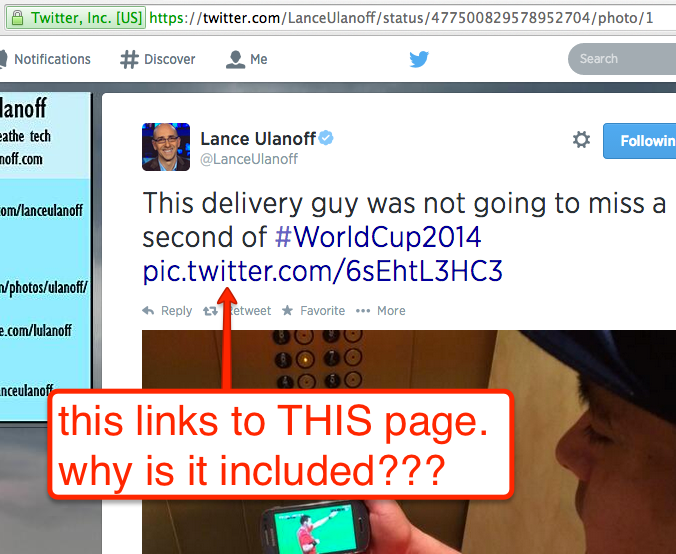
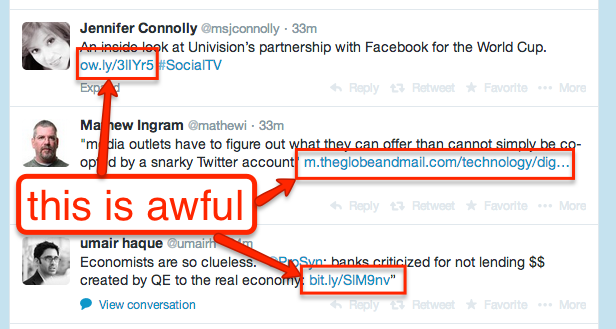
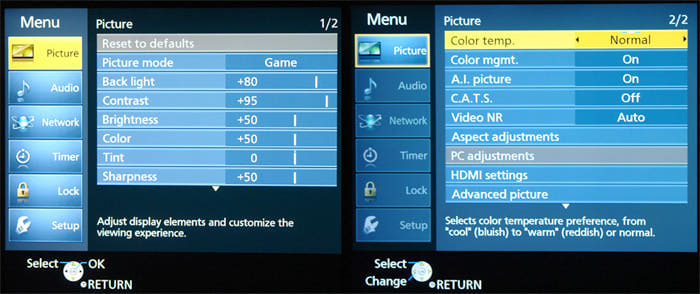
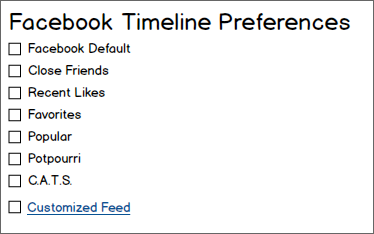
    Ok, sorry I had to do that, but it’s important.  And to my friends on the TV manufacturing side of the world – it’s not your fault!  It’s not your fault! Most “Smart TV” user interfaces, suck, and you’re doing your best.  But fundamentally they violate so many rules of user experience design. But why are they so bad?  In a nutshell, its for the same reason you don’t expect loggers to sell fancy high-end furniture (think about that one for a second).  The products are being built from the wrong end of the production team.

    For the dining room table, what do you think, arrow foot or ball foot?

    Let’s agree that user experience design is a challenge to begin with.  Apple does it great, everyone else, not so much – and even Apple products have flaws.  Further, virtually everything about a “ten foot” user interface (the terminology we use to describe what happens on-screen on your TV) is a broken interaction model, so this is going to be crippled no matter what.  I’ll write about this more in the future, but I believe there’s a fundamental breakdown on the limitations of what you can do with any 10′ UI and a remote control, regardless of gestures, speech, etc.

    Next, per my logger analogy, effectively the teams building these products have absolutely no experience nor expertise at this kind of design.  The world of consumer electronics has (barely) evolved from dials, knobs, and switches to doing highly complicated interfaces on screens.  Not only that, every year the requirements are changing!

    And since this is a new field (despite almost 20 years worth of ten-foot UIs), there are very very few folks out there who have dived deeply into this problem (the Wikipedia page on the topic barely even requires a scrollbar to read everything).  So the same people who are used to just getting the TV to work right, are now also in charge of creating “an experience”.  I think this is a guaranteed to fail situation, and it’s unfortunate for everyone involved.

    The last "easy" TV user interface.

    I do have some tips and thoughts for these UIs, since I can’t effectively get everyone to just up and stop making them (pretty please?).  First, you can read my comments a while back on designing better Boxee and Google TV apps.  Now, here’s three more things to think about:

    • Stop making things look like Commodore 64 graphics.  Seriously, I understand the graphics processors inside the TV platforms are low powered inexpensive solutions, but people have a natural (bad) reaction to seeing such low quality graphics on their beautiful HD sets.  If you can’t match them up, find ways to cut down on the overall interface and use the scarce resources to make things prettier.  See Boxee, Google TV, and Apple TV for the “prettier” 10-foot experiences.

    Now in beautiful Full 1080p HD

    • Understand a 2D “grid” of options.  Many of these UIs create multiple planes of interfaces, yet fail to recognize the user has to navigate with a simple UDLR remote control (or wand or whatever).  This creates unpredictable experiences, and makes your user less naturally comfortable with the interface.  You should be able to look at the screen and always know “what happens if I push the Up arrow button”.
    • Reduce button clicks.  At no point should the user have to click more than 3 times to get from one part of the screen to another, and you should never create an internal scrollable region.  For example, my VUDU service (which I love) has me scroll through long lists of movies when browsing a category (such as Comedy/Drama, which, let’s face it, really means depressing movie with some funny moments).  But, as a result, if I want to change the category,I need to scroll all the way up to the top of the screen again to choose a new option.  This is too much work!

    Ultimately, this again reinforces my belief that anything new coming from Apple will be highly based on AirPlay concepts, and the 10-foot UI will one day be a thing of the past.  And what will replace it?  This.

    Related Posts:
  • Data Confirms: Apps + TV = :(
  • Is the Smart Phone also a Smart Remote Control?
  • Decoding “I Cracked It”
  • Strategy Analytics announced today: “Android Captures Record 39 Percent Share of Global Tablet Shipments in Q4 2011″.  Bloggers go nuts with it, headlines such as “Android Grabs 10% Tablet Market Share from Apple in Q4 2011” and “Android tablets gain ground with 10.5 million sales in Q4 2011“.  Here’s a quick fact check: the report was about tablets shipped, not sold.  Sounds like a minor little nit, but it isn’t, and if you’ve never been inside the actual business of hardware before, it’s a fairly common mistake.

    Shipping a product implies it’s been manufactured, packaged, and transported into a distribution facility, and in some way allocated by a retailer.  It hasn’t necessarily been purchased by the retailer yet, nor has it been sold to a consumer.  Which means a massive cost was incurred by the manufacturer, with no revenue so far.  Further, even if the retailer has made some form of purchasing agreement/commitment, they typically have many many ways to back out if units aren’t moving.  All, of course, at the expense of the manufacturer.  This is how Logitech lost $100 million on the Revues, as they made a bunch, but couldn’t sell them.  As Seinfeld might’ve put it: “See, you know how to ship the product, you just don’t know how to sell the product and that’s really the most important part of the product, the selling. Anybody can just ship them.”

    So let’s go back to that report.  10.5 million Android tablets shipped in Q4.  Not too shabby.  Now Apple did just announce they sold 15.4 million iPads in the same quarter.  So we know we aren’t talking oranges-to-oranges comparisons already.

    I’m going to add in a personal observation/anecdote here, take it with a grain of salt.  In the past year, at over 20 conferences, 30 flights, and possibly hundreds of meetings, I’ve seen about 15 android tablets in use “in the wild”.  I’ll go as high as 20.  That’s it.  Not only isn’t it close to 40%, it’s not even close to 1% of the tablets I’ve seen in use, in every major metropolitan area in North America.  But that’s not a fair way to look at it, so I’ll assume I’m off by a few percent, especially including the international market plus the recent hotness of the  Kindle Fire.

    But let’s pretend they somehow sell-through 5% of the total tablet market, as defined by iPad sales.  That’s 750,000 units sold.  Maybe a little low, but as I scan the numbers from a bunch of different reports, doesn’t seem too far off the mark (NPD reported a grand total of 1.2 million non-Apple tablets sold between Jan-Oct last year).  Let’s bump it to a cool million, just to seem “fair”.  That leaves manufacturers with 9 million unsold tablets.

    According to a variety of reports (best from iSuppli), tablets cost manufacturers between $200-$300 to manufacture, on average.  So again, averaging it all out (which isn’t exactly right, but that’s kind of the theme of my blog anyway, right?) at $250 times 9 million units equals holy crap.

    $2,250,000,000

    Oh, and this doesn’t include marketing, packaging, shipping, warehousing, taxes, and all the other costs involved.  Please, somebody, show me how I’m wrong!  No, seriously, I don’t actually want to be right here!

    Related Posts:
  • It’s got a pen?!
  • A Million (free) Angry Birds Downloads Exposes Critical Android Platform Fail
  • Does anyone *really* use Android tablets?
  • We Need a Digital Do Not Disturb System

    January 25th, 2012
    by Jeremy Toeman

    I don’t need to write much “backstory” on this one.  Thanks to the technologies that pervade our lives, we are in a hyper-connected world.  But methinks it’s too much, and the blame lies solely on us, but all of us and in two different ways.

    1. We let ourselves get interrupted.  Multitasking is basically a lie, nobody’s good at it, and it’s proven unproductive.  If you have multiple windows doing different things, bottom line is you are getting less done.  Further, we leave our ringers on, have pop-up alerts for lots of things (from meeting notifications to Twitter DMs), leave our chat/IM programs open, have email checking once a minute, etc.
    2. We interrupt others.  Sending a chat request, a text message, a DM, etc is, in effect, an interruption on someone else’s time.  I loved Jeff Jarvis’ post on how we need to redefine “rude”.  The problem right now is, we’ve all accepted so many interruptions as “the norm” that we are imposing it upon others, and expecting them to react to our whims.

    We need to fix this, and soon.  And I don’t mean for the “decreased productivity” factor – Americans especially have gotten far too focused on how productive we all are.  Here was Bobby Kennedy’s famous quote on measuring productivity:

    “Too much and too long, we seem to have surrendered community excellence and community values in the mere accumulation of material things. Our gross national product … if we should judge America by that – counts air pollution and cigarette advertising, and ambulances to clear our highways of carnage. It counts special locks for our doors and the jails for those who break them. It counts the destruction of our redwoods and the loss of our natural wonder in chaotic sprawl. It counts napalm and the cost of a nuclear warhead, and armored cars for police who fight riots in our streets. It counts Whitman’s rifle and Speck’s knife, and the television programs which glorify violence in order to sell toys to our children.

    “Yet the gross national product does not allow for the health of our children, the quality of their education, or the joy of their play. It does not include the beauty of our poetry or the strength of our marriages; the intelligence of our public debate or the integrity of our public officials. It measures neither our wit nor our courage; neither our wisdom nor our learning; neither our compassion nor our devotion to our country; it measures everything, in short, except that which makes life worthwhile. And it tells us everything about America except why we are proud that we are Americans.”

    I think we’ve all tolerated these interruptions because we are chasing these false ambitions, and perverting the concept of productive to “work all the time, letting anything interrupt me, because it makes me seem/feel busier and therefore more important and more productive.”  I suggest we stop it.  And, since I’m human too, I’m going to state that I am fairly guilty myself, but I’m working on it.

    I want a “do not disturb” app.  I want it to run on my desktop, iPad, iPhone, and laptop.  I want it to let me control when I’m interruptible and when I’m not.  I want it to work in a “polite” way, so nobody thinks I’m avoiding “them” but can be properly informed that I’m using this block of time to work on something specific.  I want it to let someone override in case of emergency, and I want it to mesh with my schedule.  I don’t need it to be very “smart”, it doesn’t have to “learn”, it just has to work.  And yes, I know it’s impossible, and this is unicorn territory.

    But what I can do in the meantime…

    • Shut down Tweetdeck and start using Twitter when I want to, not worrying that I’ll “miss something” because in all truth, real-time is irrelevant for 99% of our personal and professional lives (unless you are actually in the media).
    • Turn off all notifications on my iPhone.
    • Close Skype and Adium except for when I want to chat with someone (which I’ve hopefully scheduled already).
    • Close mail, only checking it a few times a day – and move all “rapid back & forth” email conversations to the phone.

    I have no idea how to do the above 4 things and actually make it work, but I’m going to try.

    ps – my official interruption count while writing this was: 3 incoming texts, 1 twitter DM, 1 Skype instant message, 1 appointment reminder, and a Words With Friends update (I won – yeah, baby!).

    Related Posts:
  • This Is My Turntables (Sorry, I Badly Speak English)
  • Digital TV, Computer Style
  • Long(awaited)horn Tested Out
  • So when might Apple announce a television?

    January 2nd, 2012
    by Jeremy Toeman

    Seems like Apple has news coming later this month.  Regardless of your feelings about Apple, it’s safe to say they have mastered the art of the product launch like none other.  Even when virtually every detail of a new product gets leaked due to it being stolen lost at a bar, they still master the news cycle and generally enchant and entertain.  Some might argue they simply do things whenever they want, others would surmise they do it entirely calculated on a spreadsheet based on maximizing sales.  My guess is they do it “when they can” – the moment they are done with the first production line and have the shipments queued up, the media invites go out, a few semi-leaks pop up here and there, then off to the races.

    This works great when you can fit a few hundred phones into every crate and airdrop ‘em over the US at the same day/time with ease.  Sure it’s costly, but in the grand scheme of things, no big deal.  The boat’s left the harbor at the same time, and within 3 weeks the full distribution cycle is up and running.

    But now we’re not talking about a gadget that fits in your pocket, it’s an Apple Television (right? right?).  And despite what self-aggrandizing promoters some analysts say, it’d be my guess that they ship them in more sizes than just 32″ and 37″ (seriously, how did anyone actually believe that?).  Unless they’re about to pour forth with statements about how those are actually the ideal sizes for a display, I don’t think they’re about to exist in a market where size really does matter and play on the small front.  I’d guess we see one at ~32″, ~40″, ~50″, and ~60″ – those are the main categories of TVs sold today.

    Yeah, I'm on a truck. Life's just that good. I have a keg back here too.

    And now is where we face our hurdle: these TVs are big.  The box for my Samsung 63″ plasma barely fit into a pickup truck!  You can’t exactly airdrop hundreds of each model to Apple stores.  In fact, every aspect of the logistics to pull off Apple’s typical surprise & delight maneuvers is quite tricky here.  So that’s problem number one – in my guess they solve this via the “and you’ll all be able to receive your units 30 days from today” type of solution.  But there’s no way you’ll hear “and you can go get them in Apple stores nationwide this afternoon.”

    Second, unlike phones and iPads, and even computers, TV buying has a lot more seasonality to it.  And other than a core set of fanatics (nope, I’m not at that level yet), most people aren’t about to pick up new expensive living room gear for any given reason.  This is actually one of the trickiest nuances of the TV world (on the hardware front) – it’s really hard to get someone out of their buying cycles.  Sure, if someone was already planning to get a new set next holiday season they’ll consider getting one in June or August or whenever.  But if not, (question mark).

    So, they can’t announce too soon.  Or too late.  They can’t announce in the first half of the year.  But if they wait til too late, they’ll impact supply chain in a painful way and potentially affect sales.

    My money’s on a late Spring announcement, shipping in the Summer.  Even though it’s traditionally a terrible time to introduce a TV set to the market, it’ll give them more time to get the logistic down, the stores reformatted, and everything else into full swing in advance of the Q4 buying season.

    But then again, it’s Apple, so “the rules” just don’t apply.

    Related Posts:
  • The Case Against an Apple Television
  • Why iMacs will get Apple TV, not Apple Television
  • Hey Apple, you get NEXT week!
  • Posted in General | 2 Comments »

    CES Tips: CES 2012 Edition

    January 2nd, 2012
    by Jeremy Toeman

    One of my favorite CES moments. I'm 1/4 of the way to winning an EGOT!

    Over a dozen CESes later (is that how you pluralize CES?), my tips for attending CES have shifted a bit, but not too much.  But for a personal first, my tips aren’t changing at all since 2011′s CES Tips list.  So, here’s that list, copied and pasted for your convenience.

    1. Wear Comfy Shoes!
      Of all the feedback I get on these lists, this is the one people appreciate the most.  CES isn’t supersized like it was back in ’08, but it’s still big, and tired feet equals sore back equals unhappy attendee.  Freebie bonus tip: while walking the show floor, try to walk on the booths as they tend to have better padding than the walkways between booths.
    2. Stay Clean
      I’m not a purel fan in general, but for a show like CES with over a hundred thousand people visiting from every continent, you are guaranteed to bump into someone who has exposure to some bizarre strain of something that’s going to make your next few days pretty miserable.  Keep your hands clean, wash before every meal and snack, and you’ll at least up your odds of avoiding the CES Flu next week.  Good luck.
    3. Pack Light
      My recommendation is to walk the floor with either nothing or a near-empty backpack. Forget shoulder straps, you’ll be aching by the end of the day. Bring nothing you do not need during the day. Also, try to dump your bag prior to dinner, so you can spend the night on the town without having to remember anything later. What happens in Vegas…
    4. Be Nice to the Staff
      Booth workers have likely sacrificed their entire holiday season to prep for CES.  They have to answer a thousand questions or so an hour.  Their demos are probably going to go awry as they are probably dealing with brand new gadgetry that doesn’t really work so great.  Treat them nice – don’t pester them as if they are tech support – they aren’t.  Don’t ask them hour-long questions on some weird technology nuance.  Don’t badger.  And don’t suck up all their time considering there are folks standing right behind you with questions to ask too.  Just be nice, they could use a little break from time to time.
    5. Plan Everything
      Figure out which booths in which halls you are going to prior to getting there.  Figure out where your dinner is, and book enough time to get a taxi.  Figure out where to get your badge before going there.  Figure out where your parties are, and plan that properly.  ”Winging it” utterly sucks when it comes to CES and Las Vegas.   Traveling between any two destinations could easily take an hour, even as early as 8am. If you try to leave the show, go to a hotel, then come back, your day is done.
    6. Skip the Swag
      Do you really want a Panasonic pen, or a Sony plastic bag, or a brochure from TiVo? Really? My wife has actually forbidden me from bringing home anything, period. Also, for those of you into conservation (which should be, you know, everyone), no better way to send a message than to leave Vizo with an extra truckfull of mints (note that for the 2012 edition I changed Samsung to Vizio, just for funsies – yet I kept the same gag in from 2011 #lazy).
    7. Stay Hydrated
      If you carry only one thing (a simple backpack, remember?  no?  back to #3 for you!), it should be a bottle of water.  Also, since your hotel room will be quite dry, leave the bathtub 1/4 full of water overnight, you’ll feel better in the morning.
    8. Get Connected
      Since about 80% of everyone at CES will be using an iPhone, odds are y’all won’t have much of a signal.  Further, wifi is going to be spotty at best.  I recommend relying on texting as your go-to method of staying in touch with folks.  Either that or grab a MiFi for the week.
    9. Share Cabs!
      When you get to your hotel taxi line in the morning, and it’s huge, here’s a simple trick to save yourself 30 minutes per day(or more).  Walk to the front, ask if anyone’s going to the convention center, if they say yes, offer to pay for their cab.  You aren’t actually “cutting” in line, because the person who was 2nd in line remains 2nd in line and you have no impact on their wait.  Easy one, eh?  By the way, you should be sure to tip a little extra when you do this, since you’ve taken away a full fare.  Plus, sharing is caring (I don’t know how that fits in here, but it sounds so nice to say).  Oh, and don’t forget – you can’t hail a taxi in Las Vegas, so grab them at hotels, restaurants, or the LVCC.
    10. Layer Up
      Vegas is in the middle of a big desert, and while it may be warm during the day, the nights are very cold in January.  Bring a jacket or a sweater when you go out.  But don’t forget to leave your CES badge in your hotel room before you leave for the night!
    11. Bring Business Cards
      I would say roughly 97% of the people that I’ve met at CES over the years who don’t have cards regret not having them. Maybe it seems cool now not to carry them. Maybe you think they are so 1990s. The truth is, there’s almost no reason not to carry cards, and even looking at it from a potential loss vs potential gain perspective says: carry the darn things! And Moo cards don’t count, people.  Updated for 2009201020112012:  Still true.
    12. Follow Live Online
      Engadget puts up a post every 3.8 seconds during CES (this is not a fact, I am just guessing – it’s probably more frequent than that). Make sure you tap into theirs (or Gizmodos or your own favorite gadget blog) during the course of the show.  If you are AT the show, you might find out about something cool to see; if you are stuck in your office, it’ll be kinda like being there, except you are stuck in your office and they’re in Vegas. Loser.

    Oh, and if you missed it, here’s a video of myself and Robert Scoble talking about whats in store this year.  Have fun at the show!

    Related Posts:
  • Expectations and Thoughts for CES 2013
  • 5 Tips for a Digital Valentine’s Day
  • My Two Fanboy Worlds Collide…
  • Posted in General | 3 Comments »

    Dear Jeremy (d/b/a HBO) [guest post]

    December 28th, 2011
    by Jeremy Toeman

    This is a guest post by Lee Milstein, you can find his bio below.

    Thank you very much for taking the time to explain your stance on why I won’t soon be able to subscribe to HBO GO without first becoming a cable customer.  To paraphrase your argument, you indicate 3 primary motivations for keeping your service as an add-on and not making a direct consumer offering.  Those motivations are:

    1. You don’t have a direct customer business today and would have to staff up, primarily for billing and support to be able to make an offering;
    2. You don’t believe you’d be better off (financially) trying to go after individuals directly; and
    3. You make too much in guaranteed payments from your existing customer base  (the cable MSOs) to risk pissing them off.

    You’re stance, while rational and understandable is also wrong. Taking each point in turn:

    You do have a direct customer relationship today.

    You already maintain an active user database on your website, complete with authenticated email registration, and you offer technical support to your users on the same site.  So, the issue is not that you LACK consumer touch points, it is that you believe them to be insufficient.  I think you’re better off than you realize.

    Apple has proven that, with a good enough product, you don’t need free customer support.   AppleCare subscriptions or one-time incident fees are required for support for streaming services from Apple, and I’d be willing to bear the same lack of support for you.  In fact, NOT offering support may help your cause (more on that later).

    Further, online payment is an opportunity to partner with players such as Google, Square, Amazon, PayPal and others in what is amounting to one of the most brutal fights in our digital world.  For the right deal, any one of them would likely be willing to help you get transactions working.  Plus, you have DRM covered as part of the streaming protocol and with very little effort, you can do what Spotify does, allowing only 1 stream to run at a time on the same authenticated account.  You already have most of what you need.

    The Direct-to-Consumer Opportunity is Big, and not Mutually Exclusive with the MSO offering.

    In your letter to MG and in other public statements/posts, you’ve pointed to the 100M cable subscribers (70% of which don’t subscribe to HBO today) compared to only 3M broadband customers as a reason to stick ONLY with your current model.  BUT, the broadband subscribers represent a mere fraction of the potential market for HBO GO, and it is a group of users that has been marketed to efficiently for decades.

    The real potential customer base includes tablets and smart phones, not just broadband subscribers.  With over 25M tablet devices and roughly 400M iPhones/Android phones now on the market, after making some assumptions about geographies, the potential domestic user base is likely to be in the range of 200M subscribers, not 3!  That’s twice as large as the cable base, and they’re worth more money to you.

    Assuming you get 50% of a subscriber’s monthly payment from cable; that means your 28M subs net you approximately $196M per month in the US (again, let’s leave out your international revenues, which are both substantial and need not be impacted at the outset).  If you need to make that whole number with digital subscribers (at the $20 monthly rate suggested in MG’s letter), you need only roughly 10M subscribers to make even money.  You can have 1/3 the number of subs for the same receipts!  Netflix, even after all of this summer’s hoopla is estimated to have around 20M subscribers and they don’t have the original programming that is the biggest draw for HBO.  You can’t do half as well as Netflix?   Plus, the cable MSOs have had decades to attract HBO subscribers for you and still haven’t surpassed the 30% mark.  What’s going to change?  Direct is a much bigger opportunity than you’re suggesting

    The MSOs aren’t going anywhere.

    But it would be fair to agree with the above and still not be willing to risk guaranteed revenue if indeed the MSO revenue would be put substantially at risk.  It wouldn’t be.

    There are at least 3 arguments worth highlighting here:

    1. Making an offering won’t take your MSO revenue to zero.  The cable companies won’t drop you (you’re still worth too much money to them), so they’ll simply renegotiate, but again, not substantially.  It is fair to assume that not only will a material percentage of people continue to subscribe through their MSO, but a naked offering from HBO can help highlight a cable offering as premium.  The vast majority of Americans have access to local broadcast channels free over-the-air, yet choose to subscribe to cable.  Making a similar argument for the benefit of HBO isn’t much of a stretch.  Cable still offers the easiest, most reliable means of accessing ANY programming.  Any IP-delivered video service is likely to stop at least once during playback to buffer, and require you to switch inputs if you want to watch the game.  Cable doesn’t.  Plus, there are other conveniences including direct-billing, discounts on bundled services, DVR functionality, AND robust customer service that will bolster the MSO offering.  Cable shouldn’t be impacted materially.
    2. Broadband subscriptions benefit the cable operators.  More and better streaming video offerings help drive broadband subscription and that is a good thing for the cable companies.  Access, unlike cable is a high-margin business with little incremental cost for adding a new userPlus, any new broadband subscriber offers cable a chance to convince users to take or retain core bundled services.  Cable knows you aren’t killing their business by offering something of value that requires broadband.
    3. Consumer interest won’t last forever. Finally, you can’t expect consumers to wait for you to deliver what they want.  Cord-cutting isn’t the issue, but accessing programming via the device and at the time of a user’s choosing is.  Taking a quote from Steve Jobs out of the Walter Isaacson biography, “If you don’t cannibalize yourself, someone else will.” With Amazon, Apple, Google, Netflix, Disney and many others offering direct-to-consumer access to movies and programming, people have to make trade-offs. I’d sooner pay for the series you’re making, but if you won’t let me, I’ll eventually give up.  I’m not alone.

    To Be Fair.

    But, to be fair, I understand your unwillingness to do it TODAY. You’ve got enough money coming in and your building a large enough stockpile of great original programming to license out if you choose to do so.  There’s very little urgency.

    I don’t blame you for waiting, but you don’t have to.  I’ll sign up today.  You’ll make more money and grow your audience.  I hope you’ll reconsider.

    Thank you,

    Lee

    About Lee Milstein: Trained as a lawyer, but a tech guy at heart, Lee is on a quest to better media through the use of technology.  Currently doing business development deals for AOL, Lee previously ran Business and Corporate Development at DivX and once took a class called “Mobile Robotics” that he never heard the end of from his friends. Read more on Lee’s blog.

    Related Posts:
  • Jeremy
  • About
  • Mandatory reading: Palm needs an intervention
  • How to be a Great Mentor

    December 27th, 2011
    by Jeremy Toeman

    Let’s face it, running companies is tough.  Really tough.  We all need a little help from time to time, whether this is our first startup or our tenth.  Unlike when I started my first company back in the mid-90′s, there’s free flowing advice all over the Internet.  But not all advice is appropriate for all companies, and that’s where industry knowledge, experience, and expertise matter, and I’d make the claim that there’s not a business leader on the planet who couldn’t use some form of mentor from time to time.

    Personally, in my roles at Stage Two500Startupsthe C100, and Founder Fuel, I’ve acted as a mentor for literally dozens of companies, both big and small.  I really enjoy the process of getting to know the team behind a new venture, learn about their goals, their ambition, and their vision.  It’s the latter that makes up a key starting point in any mentoring session – understanding vision. I feel most startups are clear on their business, their tech, their product, their market, but can rarely clearly articulate vision.  My #1 tip to all entrepreneurs (first time or tenth time) is to watchthis TEDtalk by Simon Sinek.  To mentors – think about your role, your process, your learnings over the years and figure out your own “must-do” items for the companies and teams you meet.

    Whether formal or informally structured, I think another key thing entrepreneurs and mentors need to figure out is what they want to get out of the relationship.  Oftentimes I get brought into some strategy or brainstorming session, but nobody in the room has any goal or desired outcome.  The best way to get the most out of these structures is to know in advance what the targets are.  Then you can get right to work, dive into the product, the pitch deck, the business model, the marketing strategy, etc, and also have some form of expectation management.  This burden falls equally on the mentor to help guide the entrepreneurs as to what they *could* get out of the relationship.

    It’s important to know one’s strengths.  I’m known for creating great product experiences, marketing strategy, etc, but also more specifically in the consumer technology field.  Sure, my experience and knowledge can lend itself to helping an enterprise company navigate some issue, but I’m sure I’d be better off finding that company someone with more pertinent advice.  There’s tons of smart people out there, so try to find the ones who have directly tangible experience to what it is you are doing.  And to the mentors, ditto – yes, you can probably help lots of companies, but you as well should try to focus your energy on the companies you are best suited for.

    It’s just as important to know one’s resources.  I’m a father of young children and work at a startup.  I don’t have much time on my hands.  So when a company asks for my help, I’m typically pretty clear about my availability with them.  Everyone has constraints, so both to entrepreneurs and potential mentors – make sure these are well communicated.

    Lastly, and probably most importantly: expect brutal honesty.  I open every new relationship by saying “I trust you have friends and family to tell you how amazing you are and how this startup will change the world.  That’s not my job.”  There’s a great blog post on “stop being so nice” here, and I agree with it all the way.  I’m not mentoring when I’m ignoring flaws in the business model, or go-to-market strategy.  I’m not being helpful when I say the app “has potential.”  It’s when I help dive into these issues, and keep asking the “why is that true?” or “and how exactly will you do that?” questions that I’m being a good mentor.

    Now, be careful not to berate.  Startups have their boards to be on their ass about whatever mistakes they are making.  The mentor’s the coach, the “go give em hell, tiger” person – once the path is clear, that is.  I make sure to toe the line well between finding (and attempting to fix) problems before they happen, then help right the course when the problems do happen.  You never want to feel bad leaving a mentoring session, but as I said earlier, you aren’t the cheerleader either.

    Finding and/or being a great mentor is a challenge.  But it’s one well-worth taking.

    note: originally posted on the c100 blog

    Related Posts:
  • Excited About Judging pre-CES i-Stage Event!
  • To Win in Technology, Sell Benefits, Not Features
  • Farewell to a couple of good friends