5 New Reasons Why Apple Might Not Build a TV, Yet.

August 6th, 2012
by Jeremy Toeman

So my last time around, I was pretty “pro” on the debate of Apple building a television set device product thing. I actually was following the topic fairly heavily, and bullishly, through CES last year, when the topic just kinda sorta disappeared.  For a bit I had a hunch they had intended to launch one in the Winter of 2012, then something fell apart with it, as the rumor mill simply hasn’t been the same since.

The two reasons I surmise why they may have planned, then pulled, a set are: (1) they weren’t happy with the physical product, possibly as a direct result of LG/Samsung demoing OLED TVs at CES this year, or (2) couldn’t pull together the content/partnerships they needed to make it the success they demand.  Then again, maybe they never had a plan to do one and finally the tech media moved on to another topic.

But here I am just shy of a year since my last post, and with some new thoughts.  In no particular order…

1) Apple makes “small” stuff. Every current product they make can be easily carried out of a store.  In fact, you can almost sense it by comparing sales rates of iPhones/iPads to iMacs.  TVs are even bigger, and while Apple has magic, you just can’t shrink the physical requirements of shipping around 55″ flat panels. While they could certainly have a white glove level of service, it doesn’t “feel” Apple to me if I can’t get it in the store, and bring it home – now. Apple is amazing at satisfying the on-demand lifestyle, and a big bulky box shipped to your door isn’t quite the same.

2) Apple makes “frequently replaced” stuff. Every current consumer product Apple makes has replacement cycles under 4 years, some 1-2. TV is 7+ and I don’t see that changing.  There’s a certain point at which the inconvenience and hassle of mounting (and unmounting) big things to walls trumps the sexiness of any product.  It’s one thing to decide on a whim you’ll replace your phone or laptop, it’s another to deal with TVs and inputs.  And even if there’s a magical solution for wall-mounting and a magical solution for cable management and a magical solution for set-top boxes, game consoles, and other equipment, consumers are used to this cycle, and that’s a much much harder thing to change.

3) Apple makes “clean” stuff. Of all my Apple products, my iMac has the most potential cables to connect, most of which aren’t used, and comes with wireless peripherals. My iPad has but one.  Clean, simple, elegant – Apple.  TVs, on the other hand, must be connected to other stuff.  Unless they can actually solve A/V Receivers, Set-Top Boxes, Game Consoles, and DVD/Blu-Ray Players in a single product, this mess continues to exist.  The living room TV world is practically defined by gozintas, so unless this is a TV set just for my bedroom, or Apple can convince consumers to replace a whole lot of other boxes, it’s putting an Apple product inside a big mess.  Doesn’t feel like their style as I see it.

4) Apple makes “transformative” stuff. Smartphones before Apple, with the exception of Palm products (early days) and a few other rarities, were ugly clunky awful things that came with plastic pens. Then the iPhone came, and most smartphones are better as a result.  The iPad too, transformed the entire concept of a tablet, one so good nobody else is even realistically in the market right now (and probably won’t be for a while).  They did it before with the original iMacs.  In each case, there was an experience to transform.  But TV isn’t broken in nearly the same way – yes, there are issues, but for the most part, most consumers utterly love the way TV works today. Further, in order to transform a TV experience, Apple would need to go leaps and bounds beyond current offerings.  I’ll never count the company out on anything, but the entrenched TV ecosystem is a bigger badder monster than anyone’s taken on before.  I have a very, very hard time seeing a transformation happening here.

5) Apple makes “well-distributed” stuff.  Every Apple product is available anywhere in the US, as well as Canada and oodles of other countries.  Even when the iPhone was only on AT&T you could buy it – you might have to switch carriers, but you could buy it.  Many rumors put Apple partnering with cable companies (eg buy an Apple Television from Comcast with a 2-year contract, at a steep discount), but this limits distribution regionally in a major way.  This would force them to deal only with satellite companies, but that brings an entirely different set of hurdles.  This effectively rules out distribution partners as a deployment vehicle, which then in turn limits the product to being a “dumb set” – something that seems even less likely for the company.

I may be wrong.  Heck, it’s Apple, they know how to solve problems others can’t even begin to figure out.  Let’s also be real and notice that their little “hobby” is already the #1 Internet streamer on the market, in a single year! But something about the magic needed to make a TV might be out of reach for a little while longer here.  Seems like until OLEDs become affordable (or some other equivalent step up) and until there’s a viable MVPD with full Internet distribution, we are going to have to wait a little longer for a glowing bezel to show up in our houses.

Related Posts:
  • iPod Users Starved For Video
  • CD’s Meet MP3 Players Face To Face
  • Why iMacs will get Apple TV, not Apple Television
  • Is there a market for Ultra High Definition TV?

    May 29th, 2012
    by Jeremy Toeman

    Quick history lesson. From the birth of TV through the invention of cable TV and the VCR, picture quality was effectively the same. Along came DVD, which doubled the screen resolution to 480p, ooh ahh. Then along came HDTV with 720p. Then 1080i, and now we’ve “settled” on 1080p. Only we haven’t – the next two resolutions are already picked, they’ve been called 4K and 8K by the industry for a while, and just got fancy labels with “Ultra High Definition Television.” And much as I’ve always considered Blu-Ray a loser format, I believe the same fate is in store for UHDTV.

    First, the picture quality is virtually imperceptible. I’m pausing for a second as rabid video engineers attempt to tar and feather me, but on a 50″ screen from about 10′ away, 4K looks roughly the same as 1080p – which, while I’m at it, looks roughly the same as 720p.  Unless you really really really know what you are doing, and really set up your room properly, and really have the right size TV for the distance from your couch, and really watch the right source material, and really really really – you get it.  But for most regular humans watching most regular TV (which, I might add, isn’t even being broadcast in 1080p – what? yes, it’s true – if you are watching TV, you are not watching 1080p. deal with it), your existing HDTV setup probably looks beautiful enough as it is.

    Second, even if you can tell the difference, it’s not impressive enough. I distinctly recall watching my first DVD, and I distinctly recall my upgrade to HDTV.  Each were monumental shifts in resolution and display quality. It’s reminiscent of upgrading to a retina display iPhone/iPad. But then what? If the next shift upwards doesn’t bring the same “ooh, ahh” moment, it’s a resounding “meh” – and “meh” doesn’t sell new TVs.

    Third, it’ll be perfectly timed for “higher quality format fatigue” to set in.  As I’ve described above, consumers already finished going to stores to upgrade to get to the promise of “FullHD” – which, again, generally isn’t even being broadcast in FullHD. Going from FullHD to UltraHD is just going to make folks wary, if not pissed.  Nobody likes to think their recent investment as worthless, regardless of the plummeting prices of flatscreens.  It’s too little, too soon.

    Fourth, there won’t be enough content. Whenever 4K sets are available, and I predict it’s coming within 18 months, odds are really low that a corresponding broadcast source or streaming medium will offer 4K videos. Unless a huge back catalog of content is released at the same time, most of which doesn’t even exist at 4K resolution I might add, consumers won’t see a compelling reason to upgrade.

    Fifth, streaming won’t support 4K into homes anytime soon, and physical media is dead, which means there’s not going to be 4K content anytime soon. Per above, no content equals dead format, and since we don’t really have the infrastructure in North America to support a wealth of content…

    Sixth, and it’s a minor point, but how can you have two different standards with the same name?!?!? Consumers hate that stuff. Quit it!

    Much as the MP3 killed high definition audio long before its time, I believe streaming video and a lack of perceptible difference will kill ultra high definition video long before its time.  My advice to the industry: slow down, you move too fast. I know you are losing money on just about every TV you sell, and I know that’s not changing anytime soon, but 4K in 2012/2013 is not your answer.

    My advice to the industry at large:

    • Don’t launch without a huge content library.
    • Don’t launch without multi-brand support.
    • Don’t launch without an all-streaming solution.
    • Don’t launch too expensively.
    • Don’t launch with a negative campaign against existing HDTV installations.
    • Don’t launch til you have it all perfect.  You aren’t there yet.  Stay quiet until you do.

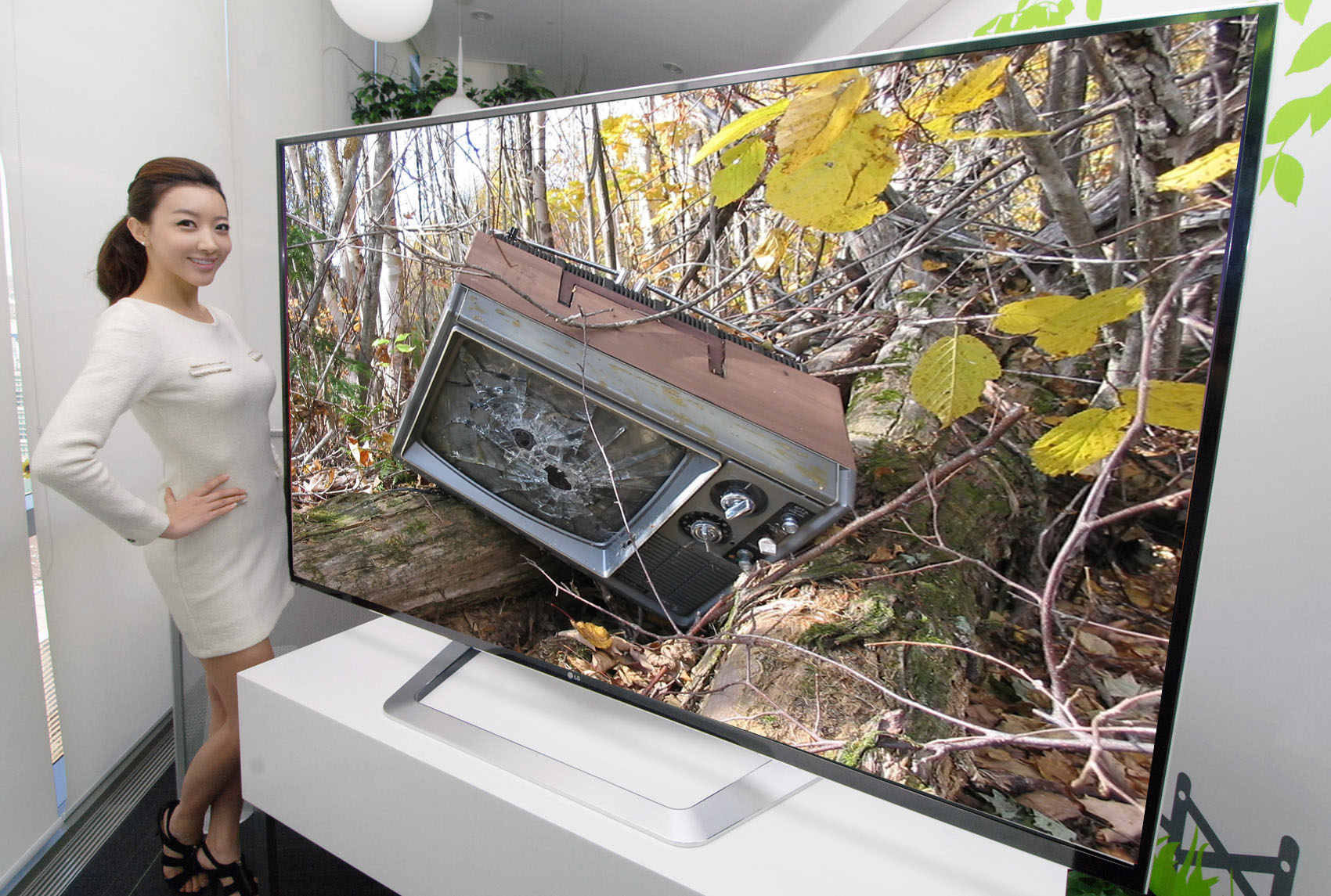
    ps – sorry for the gross picture.  :)

    pps – to videophiles who want to nitpick with some detail I’m sure I got wrong – please do so constructively!

    Related Posts:
  • Why HDMI is the Clear Choice for HDTV Connectivity
  • Belkin CableFree USB Hub
  • No HDTV for Miss Universe??
  • Why Apple Will Make a MacBook Touch (eventually)

    May 14th, 2012
    by Jeremy Toeman

    A few weeks ago someone mocked up a concept MacBook touch, and in a nutshell, they way-y-y-y-y overthought it.  After a week(ish) using my iPad with an external keyboard, I can see how the worlds could and should collide.  And I think it’s exactly what Apple plans to do – one day. The concept is already as much as there in their products anyway: ship Mountain Lion with the ability to “launch” iOS.  That’s it.

    In the current OS X, Lion, we already have LaunchPad, a feature clearly designed for a touch-screen interface, mainly because it’s the exact UI for iOS apps.  This would/should be touch-enabled.

    Next, OS X already has an App Store, the inventory of which could easily expand to include iOS apps.

    The LaunchPad would become the primary “desktop”, and Finder would move to be an app instead of the primary navigation metaphor.

    Apps could then be written as OS X, or OS X with touch, or iOS.  Standard OS X apps would function like they do today, expecting a mouse + keyboard interface.  That’s the easy part.

    iOS apps would go into full-screen, thought likely not include the ability to rotate – but maybe they wouldn’t have to.  The next-gen MacBooks are already rumored to go retina anyway, which provides enough pixels for a portrait-mode app to run on the screen size of a 13″ laptop.  Granted, a ton of apps would work poorly – things that require lots of motion sensitive or heavy gesture inputs.  But maybe that’s okay.  Maybe this isn’t about a laptop with great Infinity Blade capabilities, it’s a bit more focused on productivity.  More on this in a bit.

    OS X with touch apps would be able to support mouse + keyboard + touch interfaces.  This is the tricky part.  There are times when touch works great, other times when the mouse is ideal.  For example, a pull-down menu is going to be too tiny to easily work with a finger, but the mouse is perfect.  Similarly, mouse-overs are useful for many applications, and the pixel-level work in design apps could never be done without a mouse.  But moving files, selecting apps to run, and creating free-form quick designs are all radically better with a touch input.  Gestures are awesome methods of navigating through computing interfaces.  There’s a right balance, and as long as Apple can clearly delineate best practices, I think some great new experiences would emerge.

    Combining the full power of OS X and iOS brings great power, and accordingly, great… You know.  But in all seriousness, this isn’t meant as a “make a MacBook all fun like the iPad” nor is it “turn the iPad into a productivity center”.  It’s both.  The computing era has evolved to the point where touch is a key part of things.  Further, Apple is uniquely positioned to create a product like this, where the touch features augment the overall platform, as opposed to just being gimmicky.  Lastly, they’ll create yet another leap forward that their competition will have to spend eons catching up to.

    ps – for those wondering, I’m using the Logitech Ultrathin Keyboard for iPad. I love it.  I started with the Apple Wireless Keyboard (with great sleeve by SF Bags) but ultimately preferred Logitech’s solution.  Amazingly.

    Related Posts:
  • Apple to announce ultraportable tablet Mac?
  • I’ve got MacBook buyer’s paralysis
  • So… Macworld’s tomorrow…
  • Posted in General | No Comments »

    At this point, my iPad has effectively replaced my laptop for everything other than photo management and documents.  The former isn’t going to change, but I realized that having a keyboard might notably improve my ability to work on longer docs and emails.  I’m currently trying out the Apple wireless keyboard (with handy protective sleeve from local vendor SFBags) though I’ll also give the new Logitech ultrathin keyboard a try (if/when it ever ships).

    In my first day the difference was notable.  I’ve created Evernotes, long emails, and in general found the keyboard goes a long way.  Yay for that. Further, there are some handy keyboard shortcuts that make using it even more pleasant.  But I think this could go a long way from where it is.  Granted, there’s no debate that the overall experience around finger-based controls and gestures absolutely trumps using a keyboard, but that doesn’t mean a few power features couldn’t go a long way.  Here are some hopefully easy-to-implement shortcuts that I think would improve the existing experience:

    1. Multi-task app switcher (⌘-tab)
    Pushing this combo in OS X results in an application switcher.  You can use your mouse to pick an app, or arrows to navigate between them.  Same functionality could be present in the iPad – and once you are using a keyboard, it’s actually fairly inconvenient to tap on the screen to do this.

    2. Menus (⌘-N, ⌘-R, ⌘-D, etc)
    In an app-specific sense, enable shortcuts for “menu features.”  For example, in Mail, ⌘-N could start a New Message,  ⌘-R could reply, ⌘-D could delete, etc.  App developers could have certain liberty here (potentially) or there could just be a limited set of commands.  Either would be good for any “text-heavy” app where the keyboard is in use.

    3. Home  (⌘-Esc or ⌘-Eject, etc)
    Simple one – exit the current app back to the home screen.

    4. Navigation (⌘-cursor keys)
    Per (1) above, but extend it further: if the user is in the “Springboard” interface (aka the “home screen” where you pick an app), enable me to rapidly scroll through apps (or pages of apps) with the keyboard.

    5. Switch windows (tab)
    Inside any app (with support), the Tab key should switch between windows/frames/inputs.  This is already present in Mail, but only when composing messages.  Why not elsewhere?

    6. App shortcuts (⌘-1, ⌘-2, or F1, F2, etc)
    This is definitely a “power user” feature, but let me assign 10 apps I use a lot, and quickly launch them from the keyboard.  Alternately, these could be restricted to the 6 apps in the Dock (at the bottom of the home screen).

    7. Search (⌘-space)
    Much like other tips above, this is borrowing straight out of OS X.  Especially considering the amount search is intended for active use within iOS.

    8. Settings (⌘-,)
    On my Mac, pushing ⌘-, shows preferences for that application.  In iOS, there’s a global settings screen (not to mention the plethora of apps that have their own).  This shortcut could launch either.

    9. Settings Toggles (⌘-F1, ⌘-F2, etc)
    Could be predetermined or user-configurable, but how about direct access to toggling certain settings, such as airplane mode, WiFi on/off, etc.  I’d want a Bluetooth one too, but it’d probably only work in one way…

    I know in the grand scheme of things this is a pretty minor issue.  The grand majority of iPad owners aren’t using keyboards, and probably never will.  But if someone had time to program Siri with enough depth to tell Zooey Deschanel that it’s not raining out, I can’t see this being too far out of scope…

    Related Posts:
  • First Month with a MacBook
  • Very Curious: My First Real iTunes Sync Experience (on the iPad)
  • Reach Out And Touch
  • Some TV is Created More Equal Than Others

    April 24th, 2012
    by Jeremy Toeman

    As one could imagine, I end up in a lot of conversations about second screen TV apps, companion apps, social TV, etc.  Virtually every discussion takes some long varied road to get to a point where all involved agree that the only rule in building next generation TV platforms and products is this: not all TV shows are alike, and experiences must be built with this rule in mind.

    Let’s start with #SocialTV – broadly defined in current terms as “people tweeting, checking in, and liking TV shows on social media platforms.”  While I’m pretty jaded in my belief that this is resoundingly uninteresting as a topic, it’s important to think of it on a per-genre basis, and in fact, a per show basis.  One could state that “dramas” for example won’t garner much social TV activity – who really cares about checking in to shows like CSI or House?  Then along comes Game of Thrones, rule broken.  Then you could use Game of Thrones data to claim people don’t tweet while watching live TV.  And along comes sports and reality shows.

    When it comes to planning and thinking about how users may/will behave regarding social TV and shows, I recommend thinking about it from two perspectives: (1) live interaction and (2) cultural impact.  The personal drivers for a lot of these activities have to do with the social perspective.  People are interested in “connecting” with others, which drives the interactions (tweeting about your team, someone getting voted off the island, etc).  People are also interested in being part of the cultural zeitgeist – Game of Thrones is “in” and “cool” to tweet about, whereas CSI and House are not.

    Next up are companion apps – smartphone and/or iPad apps designed for use during a TV show.  As above, the potential value creation here is entirely about the content.  Do users really want to pull out their phones and read trivia while watching an intense or immersive show like Game of Thrones or The Good Wife?  Doubtful.  Am I going to look away from a visually-rich experience such as Planet Earth? Or how about Family Guy, where half the show is visual gags?  Seems unlikely.  But during any reality show, game show, talk show, or sports? I’d guess there’s a huge opportunity here.

    Same moral as above, the right companion apps keep the content in mind.  First, we really don’t need (or want) a dedicated companion experience for every single show that airs – it’s just plain unnecessary.  But regardless of that, the experiences should think about the audience and how they want to interact.  Sports is all about real-time and stats.  Cooking shows, on the other hand, don’t need a real-time experience, but yet offering recipes, how-to, pictures, etc that can be bookmarked, archived, and viewed in the future is quite handy.  Complicated plot-driven shows can offer complementary experiences that supply background or other pertinent information to help audiences keep up with whatever’s going on.

    Enhanced content offerings - featurettes, behind-the-scenes, and other options that plunge the user in a further immersive landscape blah blah blah. Now, speaking as the guy who watched all 3 Lord of the Rings movies, extended cut, with director’s commentary on, there’s no question a marketplace exists for extra content.  Blooper reels.  Making-of’s.  Interviews with Cast & Crew.  The key focus again is identifying the right content for the right show and deploying it in the right place.

    Do I really need a dedicated app for my iPad just to get extra content for each show I like?  Do I need to subscribe to something?  I think, fundamentally, content creators and technologists need to really spend time crafting the right offering for each individual show.  For example, having the “webisodes” of The Office available openly via Facebook each week is a great solution to enhance that offering.  But if I needed an Office app, with a new Office username and password, would it be worth the investment beyond the “Like”?  Doubtful.

    Overall, the time has come for TV technologists, creators, producers, etc to work together to avoid one-size-fits-all approaches to TV experiences.  Every show, every network, every device, and every platform should be regarded as a unique opportunity to engage an audience and tell a story.  Except, of course, for reality shows about celebutantes, which should just go away. Please folks, just do the right thing here.  We can find a cure, we can make it happen.  We can do it!

    Related Posts:
  • For the nostalgic toy collectors of the 80′s
  • David’s Jawbone II Bluetooth review
  • Risk using Google Maps!
  • Back in college (ah, college), some buddies and I road-tripped down to New Orleans (thrice) to experience New Year’s Eve and/or Spring Break.  Good times had by all (thankfully this all happened in the pre-camera phone era).  Whilst there, I enjoyed local beignets, chicory coffee, and discovered Cajun Power Sauce. Yum.  I bought 4 extra bottles for the return, one to keep, the rest as gifts. By the third visit, I bought a dozen bottles, since everyone loved it and it wasn’t findable in the Pittsburgh vicinity.

    Today, it’s not a big deal.  You can buy it online, from a variety of vendors. When I was a kid living in Montreal, the winter was a special time, as everybody knew someone returning from a Florida vacation, which meant a bag of fresh oranges/grapefruits.  Today, every supermarket everywhere has fresh produce, available pretty much year-round, coming in from around the world.  Today, I can order a fresh Maine lobster, have it arrive tomorrow in San Francisco packed in ice.  And it’s not just food.  With globalization, just about everything is a Google or Amazon search plus FedEx delivery away.

    I was thinking about a few of my “favorite” things, and while none are mittens, most are the things I own that are more scarce than the rest.  The outdoor furniture my wife and I bought on our trip to Vietnam.  The shirts I had custom made in South Korea.  The t-shirts I order from CafePress are also fairly special to me, but no more so than the fridge magnets I pick up for my kids in every airport I visit.  All are hard(er) to find.  But the stuff I really like?  The highly limited run shirts at Threadless – until I bump into someone with the same shirt on. Sad face. My favorite t-shirt is one I bought from a UK-based semi-custom t-shirt store (pictured to your right – feeling good Billie Ray!).

    I think there’s some kind of weird link between scarcity (or faux scarcity) and hipsters, who know about bizarre Japanese imports, coffee shops with no signs, and DJs who only play hidden clubs at 3am.  Think about the cache of being the first to discover some amazing artist, or having an iPhone case nobody’s seen before, or remembering that you played DrawSomething back when it was just a Facebook app.  Or knowing about Double Double Animal Style, back when it was actually a secret. Or having seen the original Hunger Games, when it was called Battle Royale.  Etc etc etc

    At home we can make genuine chicory coffee imported from New Orleans.  We can find the recipe online for making Caffe Du Monde beignets.  I just ordered a bottle of Cajun Power sauce (and you should too).  But the truth is, I miss scarcity.  I miss things being hard to find.  I actually miss the feeling of missing out on being able to get something.  I also believe scarcity is power. Scarcity is the new hip.  Having “the only one” or limited production runs, etc matters.  Think about the desire for sites and services that launch “in beta”.  Think about the power of “only XX made – ever.”  I predict hyperpersonalization will be augmented with hyperlimited productions, and that will cross the lines between physical and digital goods.  And that’s something I can get excited about.

    Abundance is a really great thing, except maybe when there’s just too darn much of it.

    Related Posts:
  • Was Releasing House of Cards All At Once a Mistake?
  • No HDTV for Miss Universe??
  • TiVo Series3: too little too late?
  • Posted in General | 1 Comment »

    At GigaOm, a piece just ran called “It’s not about piracy, it’s about a failure to adapt” and all I can think of is how off the mark it is (and while I don’t agree with the premise, I do think it’s quite worth reading).  Here are some examples of how the industry has adapted in the past few years:

    • 5 years ago, even with high speed internet, you couldn’t legally obtain *any* hollywood content streaming over the Internet.  Today you have Netflix, Redbox, Blockbuster, Amazon, Apple, VUDU, and many others doing just that.
    • 5 years ago, your cable company only offered linear broadcasting.  Today, they offer huge selections of video on demand content, much of which is free.
    • 5 years ago, your cable/satellite set top box was a completely locked down product.  Today, most offer programmable APIs, and have smartphone and iPad apps to control and program them directly.
    • 5 years ago, your cable/satellite companies only let you watch stuff on TVs, via set top boxes.  Today, many offer TV Everywhere options streaming to your computer, phone, and iPad.  Further, some of them even offer apps to run on Smart TVs.
    • 5 years ago, your Xbox was a game console.  Today it is a viable platform for end-to-end content delivery.
    • 5 years ago, HBOGO could never, ever have existed.  Today it’s on a multitude of devices, and growing.

    I’m not saying everything is grand and perfect and we’re all in the ultimate utopia or anything.  SOPA was a disaster, and the RIAA and hollywood lobbyists do terrible things.  It is true that getting Game of Thrones, right now, anywhere but live on HBO is impossible to do legitimately.  But I can make the same argument that getting Hunger Games outside of movie theaters is impossible to do legitimately.  Let’s face it, the amount of content you CAN get, legitimately, right now, is quite a bit.  And it’s all pretty cheap too.

    As a guy who spends virtually every day talking to people out of Hollywood, device manufacturers, and cable/satellite providers, I can say with extreme confidence: these people are moving, and moving fast. They are not sitting on their laurels.  But they also aren’t abandoning their businesses and rushing to jump on board the Internet train of “everything, regardless of quality or production cost, is supposed to be free.”  There’s a great piece over on Wired today on the topic, I recommend reading it as well.

    From my calculations, including the end-to-end costs of producing hardware *and* producing TV content, the TV industry alone represents well over $500 BILLION dollars.  This doesn’t include movies, music, video games, or other pieces of the puzzle.  It’s an impossibly huge amount of our economy and jobs to make and distribute the entertainment that we all enjoy for effectively meager amounts of money.

    Just because we are getting used to everything we want, RIGHT NOW, doesn’t mean we are actually going to get it, RIGHT NOW.  Sometimes, as a man once said, you can’t always get what you want (when you want it).  Even my 5-year-old has that one figured out (except when it applies to chocolate).

    Related Posts:
  • Is Sezmi a “cable killer”?
  • 2nd strike?
  • Nokia’s Non-Phone
  • My Two Fanboy Worlds Collide…

    March 16th, 2012
    by Jeremy Toeman

    Related Posts:
  • Strong Hands
  • Revoluion specs or mere fanboy fodder?
  • Why Apple Will Make a MacBook Touch (eventually)
  • “I’ve got it!”

    “What?”

    “We’ll give users points just for doing stuff they already do.  That’ll make them come back, be loyal, love us!”

    “Huh?”

    “Check it out.  Users will go to the stores they like, eat food they like, see the movies they like, listen to music they like.  The whole time, they’ll get points.  When they get enough points, we’ll give them a prize.”

    “Oh.  What kind of prize?”

    “I don’t know… how about we get a great sponsor, and then give away something awesome, like say… a Mercedez! Or maybe an iPad for a smaller reward.  Or a free vacation at a Four Seasons!”

    “Let’s do it!!!”

    3 months later

    “I’ve got the latest sponsor!”

    “Sweet, who?”

    “Hyundai!”

    “Oh.  Ok.  I guess that’ll fit well with last month’s Axe promo.”

    3 more months later.

    “Check it out – a Super 8 getaway in Sacramento!  Hello?”

    So what happened here?  Seemed like a great idea at the time.  Create a simple program by which users get rewarded for the activities they already like.  It’s actually a no-brainer!

    Until you apply a little game theory and a little human nature to it, that is.  Let’s play it out a little.

    Prize 1, a Mercedez.  Gets lots of people excited and enticed, gets some buzz going, maybe even goes viral.  After all, who doesn’t want a sweet ride?  So the system/app/site gets loads of initial sign-ups, then users perform whatever mundane check-in/scan/picture-taking activity they are supposed to do.  Eventually, the prize is given away.  At which point, the site has a user base chock full of people.  All is well.

    But then, they do a little data analysis, and find that most of the users who are playing the game/task/chore are really not of the demographic of Mercedez buyers.  New sponsors show up, eagerly, but at a slightly lesser stature.  Why?  Well, companies who would fund the giveaway of a Mercedez are trying to, for the most part, attract a demographic who might actually be able to buy one.  Instead, they reach an aspirational demographic, as well as, for lack of a better word, bottom feeders – folks who want the “free thing” whatever it might be.

    I'm the king of the world. Give me a prize.

    In phase 2 (figuratively speaking – it could take numerous “waves” of prize rounds for this to occur), with a lower quality item, the demographics slip worse (from a brand marketing perspective, not a judgement of people perspective).  After all, the prize moves from something highly aspirational into something accessible, likely affordable.  Which brings out the “couponeers” and everyone else who is less interested in the item per se, and just interested in winning something free.

    After that, a bit of a death spiral occurs.  Prizes get shoddier, and the makeup of the game players not only slips, but becomes more highly fragmented along the way.  Eventually everything about the platform has slipped too far to recover.  And capitulation occurs.

    Moral of the story: if you want to reward a user’s behavior, reward the change, not the things that stay the same.  That and if you don’t play any games whatsoever, odds are you’ll continually struggle with game theory.  Oh, that, and playing to become “mayor” is a crappy game, regardless of how you spin it.

    Related Posts:
  • Self control?
  • $50.00 If You’re Unhappy With Your iPod Life
  • This Is My Turntables (Sorry, I Badly Speak English)
  • The Only Two Ways People Watch TV

    March 2nd, 2012
    by Jeremy Toeman

    Over the past 30 years we’ve evolved the television experience from something where everybody watched the same shows on the same channels on the same devices in the same rooms at the same time to a world where that’s almost never the case.  Today, with the exception of appointment TV, it’s such a fragmented landscape that it’s almost a challenge to find other people watching the same stuff you do.  But with all the variance in content, services, devices, location, price, etc, there’s still really only two ways people choose to watch TV.  This is a subtle, but extremely important concept to anyone in the business of changing television.

    Deliberate viewing: you go to the TV with a specific piece of content in mind.  This includes live TV (“let’s watch Idol at 8pm tonight”), your DVR (“I need to watch last night’s 30 Rock”), and any VOD/OTT platform such as Comcast OnDemand, Netflix, Hulu, etc (“I’m going to watch the first season of Breaking Bad”).  We could also include a deliberate type of content in this category (“I’m going to watch a comedy” – not necessarily something you’d say out loud, but if you are in the mood for something funny, that’s a pretty deliberate concept).  I also refer to deliberate viewing as “search mode” for TV, since you will specifically search for the piece of content you want, whether by changing the channel, navigating your OnDemand menu, or going to your DVR library.

    Random viewing: you go to the TV with no idea what you want to watch.  This includes simple channel surfing (“nope, next!”) as well as direct channel changing (“I wonder if anything good is on TNT now.  Maybe Shawshank or Blues Brothers??”).  It also includes browsing the OnDemand options (“I wonder if there’s anything new on Netflix?”) and even your DVR (“Maybe we recorded something we haven’t watched yet?”).  I also refer to random viewing as “browse mode” for TV, since you are just perusing lists of stuff until you find something you are content to watch.  Note the last phrasing here, as random viewing is less about the “excitement” factor of watching something deliberately, and more about the “good enough to pass the time” factor, with the potential for excitement.

    Now for the cold, hard fact: any “future TV” service or product which doesn’t account for both types of TV viewing, will fail. This includes OTT services, smart TV apps, second screen apps, third screen apps, eighth screen apps, widgets, websites, gadgets, platforms, and everything else under the hood.  Again, if you cannot service both primary needs of a viewing audience, your system is a goner – unless, that is, you are specifically aiming to replace an existing component of those services (in other words – if your live TV service is designed to replace another live TV service, that’s viable, since the consumer’s ecosystem will still include whatever else it had before).

    How do I back this up without cold, hard facts?  Because people don’t really change much, and TV, specifically, is not merely “another” activity up there with Angry Birds, Facebook, Pinterest, reading books, etc.  Watching TV is a very specific type of activity, one about entertainment and more importantly, escape.  Life is hard, TV lets you escape for a period of your day – why on earth would Americans spend 4-8 HOURS per day in front of it otherwise?

    So if people don’t change, and people need escape (especially as they age – I’m not talking about 13 year olds here, for the most part), they need some version of deliberate and random lean back TV watching.  Could this include YouTube videos? Sure. How about an all-on demand lineup?  Doubtful.  How about a “TV is just an app” concept? Doubtful. It’s why most cord-cutting theories aren’t holding water.  It’s why #SocialTV is still mostly just a fad. It’s why most “second screen” apps are just barely gaining traction. It’s why Google TV is such a mess right now.  It’s why Apple TV is still a hobby.  Sure, these things work absolutely great for some, but absolutely don’t for most.

    The future of TV involves a lot of change.  And the more things change, the more they stay the same.  Long live TV.

    Related Posts:
  • Google Goes To Print
  • Spotplex – A different kind of Site Voting
  • My cord-cut TV set-up
  • Hmm, ESPN.com. I better use my double-helix encryption system for this one.

    Seriously, is there anything worse about using websites, apps, services, products, or technology in general than having to enter in usernames and passwords?  Half the sites want a username, half use my email address, and most of the time they don’t even tell me which one to enter.  Not only do I have many different passwords, I even have different approaches to making passwords on different sites.  And not a week goes by that I need to complete some kind of “Reset my password” process.

    Some sites want some uppercase letters.  Some don’t.  Some need a number – but make sure the number isn’t the first character of your password.  Some have minimum amounts of characters, some will let me through with “1-2-3-4-5″ (yeah, I know, your luggage…).  The all time granddaddy for most inconvenience?  My online bank.  Why?  Because when I forget my password, I are required not only to make a new one, but one I haven’t used before.  I’m sure this is more secure, but it pretty much creates a 100% certainty that when I come back I have some brand new approach to making the password this time, and therefore, will forget it again the next time I return.

    Unless I cheat, and write down the password somewhere, or save it in a google doc.  Which pretty much invalidates the entire purpose of all of this added security.

    Oh, and I’m sure it doesn’t help that 90% of the “remember me” or “save my password” features fail.  Which is doubly bad when its a site that has some obscure requirement on usernames, so I can’t remember those either.

    It’s awful, and I’m sure that it creates a major amount of headaches and frustration for the typical Internet user.

    Supposedly Google is trying to fix it with “automatic strong passwords” but it just gets me thinking: maybe not every single site needs a super strong password system?  Do I really need a distinct username for my online bookmarking service?  Or for Words with Friends?  Isn’t that the entire stated purpose of Facebook Connect?  Is there no way for me to “trust” that this really is a computer only I have access to, and for me to relay that concept onto the websites I want to use?

    And I think that’s part of the inherent problem here: every single individual site, service, app, etc is taking on the entire trust responsibility themselves.  There’s absolutely no common sense in play, just a CYA style approach to “best practices”.

    So I’ll personally waive some of my online security to the sites I use.  Yes, online banking and credit card companies, this is the only computer I plan to access your sites with, and if I visit, then yes, it’s me visiting.  This goes to you too, video sharing site, online game, and document backup site.  If someone steals my computer, I’ll deal with the consequences and will use the service you build me to un-authenticate this one.  And yes, Zynga, all the apps on my phone are mine, and only I will be playing them.   And if someone should snatch my phone, I too will take responsibility to close access remotely.  Because in all of these examples, I can do exactly that.

    I’m not trying to diminish the needs for security and privacy (I’m a huge privacy advocate), but I believe we need to distribute and balance the responsibility in solving this as a relationship between users and services.  I don’t need an extra set of keys to every room in my house, nor provide a thumbprint to use the stereo or air conditioner in my car.  Let’s assume that we do need some strong passwords, good encryption, and safety standards, and let’s also assume human beings can take responsibility for their actions once they are properly informed and the right experiences are delivered.

    Related Posts:
  • Some TV is Created More Equal Than Others
  • Dave McClure to VCs & Lawyers: Get your act together!
  • I want a WidgetBlocker
  • Can Social TV Survive Without Appointment TV?

    February 15th, 2012
    by Jeremy Toeman

    This is the image you get if you do a google image search for "world record".

    So the Grammy’s unsurprisingly (I will explain why I say it that way in a moment) set all sorts of records for social TV.  Just like the Superbowl did a few weeks ago.  Just like the ___ did a few weeks before that. I call this a big yawner, but first, some definitions:

    • Appointment TV: a TV show where the majority of the audience is watching live.  The 5 primary examples are Reality Shows (American Idol, Amazing Race, etc), News (CNN, uh… CNN Headline News?  I don’t know, televised news is just propaganda in my opinion anyway – but I digress), Sports (mostly hockey, particularly the Canadiens), Events (Oscars, Royal Weddings, etc), and “big episodes” of scripted television (Lost Series Finale, Game Of Thrones Season 2 Premiere, etc).
    • Catch-up TV: everything that doesn’t fit into Appointment TV above.  Literally.  Every “typical” episode of every “typical” show is in the catch-up category, which means there is no particular driver for someone to watch it anywhere near to real-time.  This is why I’m still on Weeds season 5, Entourage season 6, etc, and will catch up on things like Breaking Bad, Game of Thrones and others whenever I find the desire.
    • Social TV: let’s do this SAT-style.  Social TV : TV :: Social Media : Web.  In other words, it’s a nebulous mess of “stuff you use things like Facebook and Twitter to do while watching TV”.  It includes hashtags, check-ins, second screen, likes, and is a big jumbly undefined thing.  And I have no problem with that.

    So why do I say things like “unsurprisingly” and “yawner”?  Because this is a burgeoning activity.  We are at the very earliest stage of people using second screens whilst (yup, whilst) watching TV.  I myself tweeted a couple of times during the Superbowl (really during the ads):

    This is an infinite increase over last year’s SuperBowl.  I didn’t watch the Grammy’s, but had I, I likely would’ve tweeted.  And this isn’t just about me, it’s a pretty universal trend.  Why?  Because Twitter, the platform we are using to measure Social TV as a concept, is still growing.  So anything measuring a growing service with growing use and calling the outcome “record-setting” is really just fulfilling an exercise in redundancy.  Every new instance of appointment TV tweeting will outpace all previous instances, until Twitter stops growing.

    But really, that’s all just a sidepoint.  My issue, concern, and question, is whether or not there’s any value whatsoever in any of this for catch-up TV.  Do I care about tweets someone sent during an episode of House from last year?  Or last week?  Or even 10 minutes ago?  I don’t, and I don’t understand why someone else would either.  Nor do I care about what someone is watching right now unless I too can (and should) watch the same thing, at the same time.  Heck, I hate seeing the promos to text in my vote (to Top Chef, my guilty pleasure show) when I’m seeing an episode 4 months after it aired.

    I don’t see a solution to this conundrum.  To be clear, I’m not questioning will social media impact TV behaviors – that will certainly happen. Further, as evidence is mounting that catch-up TV is growing steadily and will inevitably outpace real-time/appointment TV, I see the window somewhat shrinking for what’s currently called “Social TV.”  But that shouldn’t really surprise anyone, as it’s such an early stage in the evolution of TV.  And if you think about it in evolutionary terms, TV is just learning about making fire now, and the wheel is probably a few years away…

    Related Posts:
  • Why are Google’s SMS services unreliable?
  • The only thing that could kill TV? TV itself.
  • My disturbing lack of cellphone