
Archive for January, 2013

To Win in Technology, Sell Benefits, Not Features

Wednesday, January 23rd, 2013

Passoverriffic!

Pictured here is a container of good ol’ Manischewitz brand cake meal (a staple of my pantry every Passover).  The packaging could show the contents, which is basically flour.  Instead, we see a picture of a cake (enticing or not).  I couldn’t think of a simpler way to make the point: if you really want to sell, focus on the benefits or outcome, not the features or process.

Every time I read about a new phone and I hear about the processor, the cache, the RAM, etc, I think about cake meal.  This is something only Apple’s mastered, and Samsung’s rapidly learning – nobody cares about what’s inside the phone, they care about what it can do.

And the same is true for computers, for TVs, even for Websites and apps.  In fact I can’t think of anything involving technology, other than cars, where this isn’t the case.

Back when I was a consultant, this was possibly my most common advice.  When I mentor with 500Startups or FounderFuel, again, a topic that comes up virtually every meeting.

And the reality is this is the blunt feedback so few people in technology seem to receive: other than your team and your supporters, nobody cares about what’s under the hood.

I recommend exactly two things for anyone not sold on this:

1 – think about how you’d try to sell cake meal

2 – watch this video by Simon Sinek, one of my all time favorite TED Talks.
Prediction: Cord Nevers Become Cord Getters

Tuesday, January 22nd, 2013

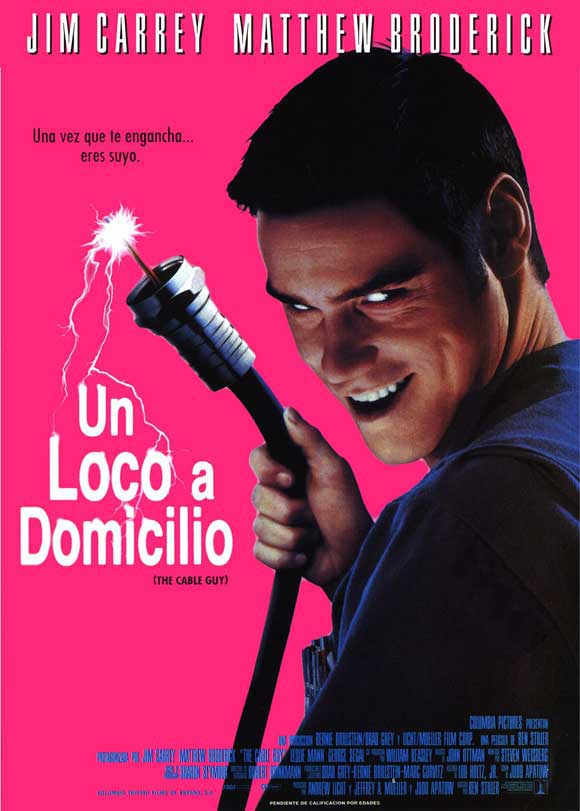
El Cable Guy es Mucho Loco

As the phenomenon of predicting the death of TV via cord cutters is waning, it’s being replaced by a plausible (at first) sounding theory: cord nevers.  Whereas a cord cutter is one who cancels their Pay-TV service for free/streaming alternatives, a cord never is, roughly, a person under the age of 22 who, upon renting their first apartment after college, never subscribes for TV services in the first place.  My theory at this point is these people may live happily cable-free for a year or few, but sooner or later, they’ll pay.  Here’s a few reasons why:

Cultural Zeitgeist
The single most common binding element pulling modern culture together today is TV, and I can’t see anything replacing that in the short term.  As someone nearing the end of their first year watching entirely “catch up” I’ve noticed, multiple times, the feeling of being left out of some conversations.  By the way, I’d like to keep this post and ensuing discussion free from judgment regarding watching decisions – I don’t care what the show is, everyone’s free to be entertained however they’d like.  But I currently have no idea what exactly a Honey Boo Boo is, nor what the Amish Mafia are after, and I have literally zero friends who just finished Season 4 of The Wire like I just did (btw – awesome).  I believe the natural gravitas of “fitting in” will drive most people toward paying.

Cheapest Entertainment Around
Estimates vary, but for a typical 4+ hours/day home, watching TV with a pay-TV provider works out to about $0.25/hour.  People love to complain about their cable bill, but they really wouldn’t if they did the math. (not that I’m advocating any provider, I’m just not dissing on them either).   Then again, math is hard.

Laziness FTW
While it’s certainly simple enough to browse Netflix on my Apple TV, find a show, then watch it, it’s nowhere near as simple as turning on the TV, then pushing “channel up” enough times until something watchable appears.  As I’ve blogged about elsewhere, I fundamentally believe in the “escapism” nature of TV watching, which makes an all-on-demand lifestyle a lot of work.

More Money, Less Time
It’s easy to talk about “those kids today” and their willingness to watch movies in 10 minute increments on YouTube.  Yeah, I remember college too –  I had loads of free time, no money.  Now I have no time, and while I don’t have loads of money, I can easily do the mental math to figure out the money value of time makes hunting around websites and menus not a good use of time.

TV, now with Free Internets!
As the pay-TV industry has morphed into MVPDs (“multichannel video programming distributor” – worst rename ever!) and offer Internet and voice and home automation and monitoring and security and dishwashing and laundry and other services (mostly for sheer profit – other than the laundry part), the allocation of revenue is less relevant for them.  They can offer quintuple packages and more because it doesn’t really cost them anything, and most have invested so much money into capital expansion that they can continue to lay out new value added services for incremental costs.  So perhaps we’ll eventually pay for TV, with free everything else – or vice versa – it just won’t matter that much.

While I do fundamentally believe we are in the middle of the most transformative era of television behaviors since the advent of the cable industry, I also think we are far from a radical new world.  Looking forward to constructive comments and feedback below.

Why the HBO/Universal deal is VERY important

Sunday, January 6th, 2013

HBO and Universal just renewed a distribution deal.  For the next 10 years.

If you are in any ways connected to the TV industry, be it for the past, present, or future of it, this is quite significant.  Why?

Part of the reason TV as an industry is fairly impervious to disruption is the unbelievably tangled knot of deals and relationships.  In TV/Movie-land, deals are (1) worth Billions, and (2) made for the long-term.

But with all the kerfuffle about TV changing, TV dying, TV this and that,we should take note that two of the biggest players in the industry just renewed a deal that is (1) worth Billions and (2) made for the long term.

The significance is, in a nutshell, that in TV-land, business as usual is still going on.

ps – dont think I’ve ever made a point before in 100 or less words!  ;)

Expectations and Thoughts for CES 2013

Friday, January 4th, 2013

I love the smell of CES in the morning.  Seriously, I *love* CES (here’s my walkthrough the show last year with Robert Scoble – be warned – its 45 minutes long), though I’d love to see them move it back in the year a few weeks.  CES is like SXSW, except people actually get some work done in addition to all the partying.  I love the vaporware demos sandwiched in between the unnecessarily huge screens and the neon. Lots and lots of neon.  LOVE IT – and no, this isn’t a long, drawn out sarcastic rant.  But I’m taking a break from my annual “CES Tips” lists, as there’s nothing substantive to add.  Instead, here’s some thoughts on what I’m expecting next week:

Nothing Revolutionary
That might sound weird, but I’m just not expecting any “big new thing” at this year’s show, instead lots of “mostly better things than last year”.  Bigger screens.  Thinner screens.  Lighter phones.  Longer batteries.  The major keynotes are from Qualcomm, Panasonic, Verizon, and Samsung – not one of these companies has a history of revolutionizing the show.

But yet, lots of cool updates
While nothing should blow us away, I’m expecting tons of improvements to other products.  More smart TVs with more smarterness to them.   Lots of UltraHD/4K TVs (sigh). More well-done AirPlay integrated devices.  It’ll be fun.

Especially OLED
Coolest thing at CES 2012 were the 4MM thick OLED TVs that didn’t ship in 2012, despite promises they would.  Coolest thing at CES 2013 will be the 4MM OLED TVs that might actually ship in 2013.

Meme Prediction: Complaints about the lack of stuff
If there’s one thing that follows the theme of “nothing revolutionary” its listening to everyone, their mother, and their mother’s facebook friends complain about nothing being new at the show. You shouldn’t be expecting something big, and whining about how you could’ve stayed home is just annoying.

Potential sleepers: Verizon & Qualcomm
Interestingly, both have keynotes, and both have large booths (and near each other).  If I had to put money on “doing something unexpectedly big” I’d place on either, or both of these companies.

What I’d love to see, but don’t expect
Flexible displays.  I’ll go so far as saying there’ll be *nothing* exciting in consumer electronics and mobile devices between now and when the first generation of devices with flexible/bendable displays arrive.  So I’ve got a secret hope that even prototype stuff will emerge from someone’s labs at this year’s show.

What I’m already bored of: More Tablets
I still haven’t seen a single product from a single company that defines a “tablet market” and I’m not expecting that to change at CES.  But, I am expecting loads of cheap tablets that might do well overseas, which is all fine and good.  Yawn.

I’m Betting On: Smarterer TVs
Every single TV company will announce new Smart TVs.  And every one of them will continue to make TVs that are harder to use than they were before.  Bummer.

Who Will Be Missing?
Amazon, Google, Microsoft, Apple – the four companies that would make the show dramatically more interesting.

That’s about all I can think of.  Shame is I’ve got so many other commitments at the show this year I have no idea if I’ll even get to walk the floor.  C’est La CES, C’est La Vie!

The only thing that could kill TV? TV itself.

Thursday, January 3rd, 2013

It’s fun to write about the “death of TV” (or flip flop on it, whatever).  Why it’s so fun, I’m not sure, but I have a hunch it’s because…

  1. It’s a HUGE industry ($500+B/year if not more)
  2. It’s been utterly untouched by the Internet (so far – a thing that really rankles a lot of people, mostly tech bloggers)
  3. The newspaper and music industries both got trashed, so why not TV too?
  4. It’s controlled by a very small number of extremely powerful and wealthy companies
  5. The aforementioned companies have a perception of (a) greedy profiteering, (b) being dinosaurs, and (c) restricting people from doing whatever they want with content, which also tends to rankle said tech bloggers

Arguments for the death of TV are equally fun to read and fantasize about.  They tend to fall into these categories:

  • “Those Kids Today”:
    Theory – Kids today like to watch the YouTubes and the Torrents!  Kids today don’t like to pay for content. Therefore when kids get older, they will continue to watch YouTube and not pay for content.
    Reality – To debunk comically: kids today like Play-Doh, Lego’s, Justin Bieber, and eating Mac & Cheese at every meal – none of which hold true when kids become grownups (well, maybe the mac & cheese bit).  To debunk more seriously: kids have loads and loads of time on their hands and very little money, so they can spend the time and energy hunting and pecking for free content – something most adults (30+, with kids) just don’t have.  Or, it’d be like assuming that because kids like Justin Bieber when they are teenagers they will like equally crappy music in their fifties.  Well, that might just happen I guess.
  • “Cord-Cutting/Shaving/Trimming/Slicing/Thinning/Balding/Receding”:
    Theory – everybody’s quitting cable! EVERYBODY!
    Reality – I’m not even going to bother finding the links, but bottom line is this – for every article that shows XX thousand customers quit Cable, if they don’t ALSO INCLUDE the part where XX thousand customers signed up for IPTV, FIOS, Telco’s, or Satellite, you need to utterly ignore the article.  After that, there’s not much evidence left.  This may change, but that’s just a theory, and one that’s yet to be really substantiated.
  • “The Great Unbundling/A La Carte/Go Direct to Consumers”:
    Theory – In the not-too-distant future, you’ll be able to set exactly the lineup you want, and not pay for channels you don’t watch.  Or you’ll watch *everything* a la carte, paying as you go.  Or channels like HBO will start selling direct to consumers.
    Reality - This is in utter conflict with how the TV industry actually works and makes money. And since they, you know, like making money, and since shows are, you know, expensive to make, they need to keep making the money.  So if channels were to unbundle, they’d instantly get so expensive people wouldn’t be paying for them.  Here’s some of my previous thoughts on this same topic.
  • “Newspapers/Music died!”:
    Theory – Because of the deaths of other industries, TV will die too, as it’s antiquated, etc.
    Reality – This is like arguing that because the coal and steel industries in the US shrank, so will the TV industry. Other than being ad-supported, TV and Newspapers are utterly dissimilar (and BTW, the way the ads work for both are exceptionally different).  Other than being, well, media, TV and Music are utterly dissimilar.  We might as well say the Internet will die soon because it’s just like newspapers.
  • “Startups! Technology!”:
    Theory – Some startup will come along and just utterly kill TV in every way.
    Reality – Yeah, no.

OK, Jeremy, Mr Big Talk Guy, so what could actually happen?  Here’s my theory on what could “kill” the TV industry as we know it – it’s “catch up TV”. For those unfamiliar with the term, “catch up TV” (also called “binge viewing” sometimes) is when you watch a show long after it aired, by days/weeks/months/even years.  Whether it’s via Hulu, Netflix, Amazon, iTunes, Video On Demand, or any other service, it’s the rapidly increasing trend on TV consumption.  And it’s the one thing the TV industry is massively enabling, and could massively come back to haunt them.

In a nutshell, the TV ecosystem is like a big food chain, with advertising dollars acting at the bottom of it all (yes, TV ads are the kelp of the TV world).  Should advertising falter in a notable way (which, by the way, it isn’t at present), it could bring down the whole system.  There are several exceptions to the system, such as HBO, but the numbers there ($1.2B) are literally paltry when compared to TV ads ($90B).  And catch-up TV represents a problem, as it’s not monetized the same way as live TV.  See the Live TV part is where almost all of the $90B of TV ad revenue comes from – hence why ratings declines cause shows to get cancelled, as they don’t generate the cash flow to sustain themselves.

So as we all get further and further accustomed to being able to watch shows whenever we want, we (collectively) are reinforcing the habit of “why bother watch live?”  For example, my friends all tell me to watch Homeland, but I don’t really have the time for a new show right now, so I’ve bookmarked it for later (ahem, NextGuide), and will just start watching it on Netflix.  Along with Breaking Bad, Mad Men, and lots of other shows I know are great, but just haven’t watched – yet.

What, then, happens to highly anticipated shows that launch, combined with audiences who increasingly choose to wait to view them?  They get cancelled (great thoughts on this by Andrew Wallenstein here).   Sure a startup like mine can benefit from this, and even become a fabled Billion Dollar Company (FTW!), but success beyond our wildest dreams will, in no way, replace the lost revenue the entire ecosystem would suffer.  And just as environmentalists are concerned about loss at the bottom of our food chain, if the TV ad system begins to crumble, then so do budgets for new shows, etc.  It ain’t pretty.

Now I’m not predicting the above will all happen – but at the current pace of things, it wouldn’t shock me to see much of it play out.  The TV industry is giving its content away way too cheaply to all the providers to sustain itself without the advertising, and they are effectively disincenting viewers from the live experience (not that it’s not cool to get a sticker or a badge or something, but let’s face it, people are smarter than that – hence the general “meh” of most of the social TV offerings – sorry guys, but #come #on), other than for appointment TV programming.  Further, it has a certain prisoner’s dilemma aspect to it all, as no single network can make the bold move to pull recent content from the variety of catch-up/streaming services – oftentimes their own apps! From the discussions I’ve had with TV execs, there’s a lot of awareness and a growing concern, but no solutions in sight yet.   But, at least it’s the enemy we know…

My New Year’s Tech Resolution: Quitting Real-Time

Wednesday, January 2nd, 2013

Let’s take a long trip back in time.  Let’s remember a world where you were running a little late for a dinner date with friends, and you just showed up a bit late, no texts.  You got to the restaurant and didn’t check-in on Facebook, Yelp, or FourSquare (oh, and you didn’t even use Yelp to find the restaurant, or double-check that it has 4 stars, you just heard about it from a friend).  When the menu arrived, you read it, picked the item(s) that looked good, and placed your order, and if you wanted to know what was the most popular, you asked the waiter.  While waiting for the food, you drank wine and chatted with your friends.  When the meal arrived, you didn’t take a picture of it (or apply a filter) and shared with others.  If the service was lousy, you told the manager, not your Followers or Friends.  When you finished up the meal, you drove home, without using crowd-sourced GPS to get there.  And as a final note, at no point in the meal did you get interrupted by others sharing equally unimportant minutia with you, but if they really *really* needed to track you down, maybe you got a call.

If you are under 25 and reading this, the above probably sounds like a nightmare, but trust me, it wasn’t.

I think it’s time to admit that living in “real-time” is a bit of a disaster, and there’s tons of studies arising that lend evidence to social media (among other things) as problematic to society (here’s a funny take, but full of facts on the topic).  But you really don’t need the studies, just some common sense.  We’ve evolved over millions of years (or, as they teach in several US States – a few thousand plus some fairy dust) and until the last half a decade, the only thing that was really crucial to do in real-time was running from sabre-tooth tigers, which we were actually pretty good at.

Since I started writing this a few minutes ago I’ve received two texts and one IM – every one of which disrupted my writing and thinking.  Thankfully I had already closed my email client (something I plan to do much more frequently), and I have push notifications OFF for Facebook and Email on my phone.  But that’s a core to it: we’ve somehow made ourselves constantly interruptible, and I can’t see how anything good comes of it.  How do you think deeply on anything if your pocket is buzzing, the corner of your screen is flashing, and other little whooshing and tweeting sound effects keep rolling by.

If you are reading this and thinking “that guy’s just an old-fuddy-duddy” (which, to be fair, no young person today would ever actually say), and you are also patting yourself on the back because YOU are a great multitasker, go take a break from this piece, google “multitasking myths” (or just read this) and then come on back.  Bummer, eh?

And it’s not just about getting stuff done, as that too is just massively overrated.  It’s about a lack of peace and calmness. When do we take time anymore just to do nothing.  Even standing in line for a coffee (which is, of course a take out coffee, since there’s no time to just sit in a cafe and enjoy a hot cup of coffee in a real cup) everyone’s on their phones, doing stuff.  The human brain actually needs time, every day, just to do nothing and process all of the events that are transpiring (great article here on “doing nothing”).

So what am I doing?  Focusing on purposeful activity, single-tasking, and shutting down virtually anything that expects me to deal with it imminently, as there are truly very few events which can transpire that I must reply to in real-time.  Somehow I doubt this will negatively impact either my professional or personal life in any way.   This doesn’t mean I won’t use services like Yelp, Twitter, Facebook, IM, and the like – it just means I’m getting a lot more comfortable turning them off for long stretches.

My focus in 2013: Enjoying the moments, and having them for myself – not others.  Enjoying the view, not the retweets of the photos. Enjoying the funny/cute/silly kids, not worrying about grabbing the camera, nor counting the likes or comments.  Enjoying walking into an unknown restaurant, ordering anything I like, getting delighted by it, and telling a friend about it some other time.  Sorry real-time, I’m pushing pause.