Archive for May 4th, 2005

Transmitting Sirius-ly

Wednesday, May 4th, 2005

I ‘ve had the Sirius Sportster Satellite Radio for about 2 weeks now. In this time I have installed, listened, and enjoyed. The first week of Sirius radio entertainment was channeled to my audio amplifier via a line-in stereo jack which plugs into the rear of my car stereo. Since this feature is not available on every car stereo, Sirius has built in an FM transmitter. For the second week of my Sirius experience I restricted myself to the FM transmitter of the Sirius Sportster.
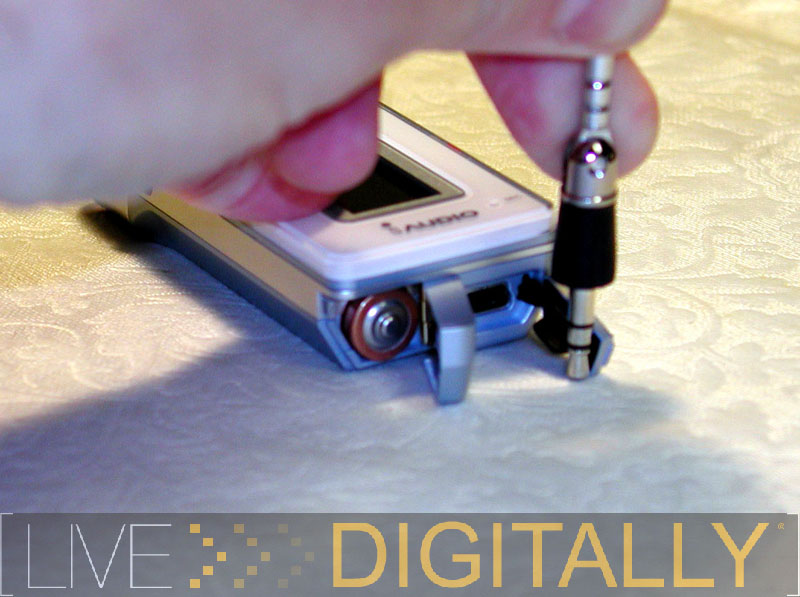
The handset transmits an FM signal, chosen by the user, and fed through a wire antenna, in hopes of your car stereo picking up the signal. My limited iPod experiences with Monster Cable and Griffin FM modulators have not been satisfactory. Therefore, I did not expect much from Sirius.

Upon FM setup, I dialed into 88.7 both on the Sportster and my car FM radio. The sound came through with no interruptions, and the sound quality was higher than my initial low expectation. I wasn’t impressed just yet, could the Sportster maintain a nice strong signal throughout a day of San Francisco driving?

The FM transmitter has a very broad range of frequencies, opposed to some modulators which are limited to the low 80’s or 90’s. I found the best frequency to be 90.9 FM for city driving.

I drove the ups and downs of the city of San Francisco for half of the day listening to Jazz, news, weather in New York, Bjork, Jack Johnson, and Ludacris. After a few hours of jammin’ FM style I switched over to the original set up of the Siruis line-out to aux input. There was a very noticeable difference in sound quality. The FM transmission seems to lose the richness of the low frequency sound.

Here’s a quick video of me cruising the streets of San Francisco with the Sirius Sportster blasting.

Results:
Using the FM modulator works well, but not as solid as the aux input.
The Sirius radio is a definite plus for any driving experience.
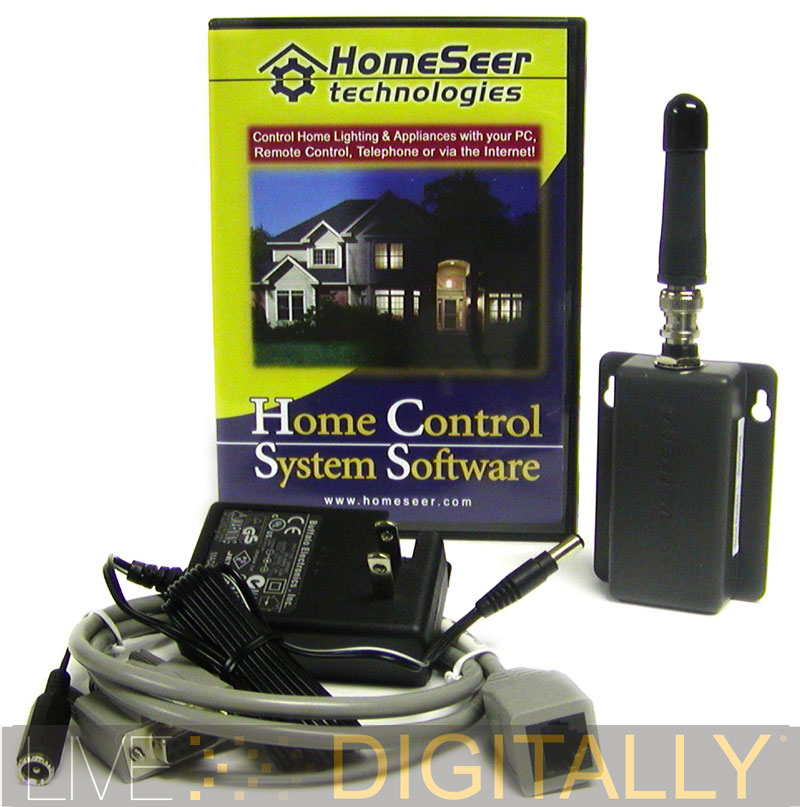

Radio Frequency, Please Identify Yourself

Wednesday, May 4th, 2005


The laser was invented in 1958, but CD players, laser pointers, and hair removal took a few decades before the laser was implemented into these world changing inventions. RFID (Radio Frequency Identification) is not on the exact same timeline, but there are global impacting inventions popping up with the RFID technology.
(more…)

Radio Frequency, Please Identify Yourself Pt. II

Wednesday, May 4th, 2005

Technology such as this can be implemented in just about any scenario I can think of, so I asked Monahan to think of some ideas for me.


I think the transmitters will continue to get smaller, so the number of uses
and applications can be expanded. I think there is a market for traffic
control, service businesses (such as automobile) so they can greet their
Customers, and track when and how long a car was in for service. I also
think the Hospital Market has huge potential for tracking assets.

We already have interest from companies to track employees and have
integrated access control with RFID to protect laptops from being removed
from property unless it is with a properly tagged owner. Mustering is
another great application where in the event of an emergency, employees must
evacuate to a safe area and log in. RFID is perfect for performing a “head
count”.

I was curious, how fool proof is this system. If I were to damage a RFID transmitter, how would the system respond? “Each RFID tag has a Tamper Switch built in that when violated can be programmed to transmit alarm bursts and then render the tag inoperative.”

The units are accessible over the internet or a local network, if deactivation or reprogramming is needed remotely.

I personally don’t have kids, a garage, or a want for internetrestriction, but I have a huge need for a system like this integrated into my life. First thing I’d do is RFID my car and program an alarm sound so I don’t get caught parking in the way of the weekly street sweeper. The RFID system would have paid for itself on that single implementation!

Bike Messengers

Wednesday, May 4th, 2005

Back in the day, before fax machines, you used to have to send a messenger boy out every time you wanted to get some paper from point A to point B. Today, fax machines aren’t even needed. Just send a gig of data over a broadband Internet connection and bamm. Job done.

The Associated Press wrote a great story today about what that spells out for bike messengers. In our own words here at LD, we would now call bike messengers Janky. They simply aren’t needed the way they used to be. Sure, I like Puck too, but I don’t trust him as much as WiFi.

Things to Buy in the Future

Wednesday, May 4th, 2005

If I were a bad blogger, I’d keep the Nanofactory Product Catalog a secret. I could probably milk another 5-10 posts from this baby. Although some of the “products” are speculative, like solar powered lawn grass, they are all the kinds of ideas that make you go hmmm.

Many of the product descriptions assume a post-nanofactory fictional history, but the site assures us that its technical consultant, Chris Phoenix of the Center for Responsible Nanotechnology, has put great effort into making all product descriptions fall within the plausible capabilities of theoretical molecular manufacturing. This includes a biomass food machine. Any kind of biomass goes in, and tasty food comes out.

Not all the ideas are pure speculation though. Some are labeled “in development” and make you smile about the bright future with bite sized gadgets that can do it all.

The Smart Car Is Comming.

Wednesday, May 4th, 2005

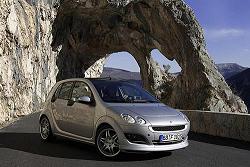
If you are looking for an eco friendly alternative to the Mini or Prius, here may lie your solution. The Smart Car, currently zipping through streets in Europe for the past seven years, is going to be imported into the US by a small Santa Clara Ca. Company, Zap. When I was in Switzerland a few years back, I remember seeing this zooming throught the narrow streets, delivering pizzas or transporting people around.

The Zap is 8 feet 2 inches long, or slightly more than half the length of the Prius, and at 1,588 pounds, it is nearly 40 percent lighter than the Mini Cooper. The three-cylinder car appeals to urban dwellers who need to squeeze into small parking spaces and like the stylish colors.

The customizable car will be sold with door panels in a variety of colors that can be switched “within the time it takes to drink a latte,” Campbell said.

In its current form, the Smart could be sold in 45 states, but not in California and four others that adhere to the nation’s toughest emissions standards.

“The European version of the car is rated to get 60 miles per gallon. However, to meet the tougher U.S. emissions standards, the car received an initial Environmental Protection Agency rating of just 37 mpg. He said the company’s internal tests indicate that the modified car should get at least 50 mpg, so it has asked the EPA for a retest.

Nevertheless, it remains to be seen if this small, reletively unsafe car, will be sucessfull in the states, for its been loosing money in Europe for a few years now.

Shopping Carts That Think

Wednesday, May 4th, 2005

In the Stone Age grocery shopping was an analog task. You wrote down your shopping list, perhaps with something as quaint as a pencil. Traveled to the store, hopefully everything was refrigerated and after getting all your items you would call it a day.

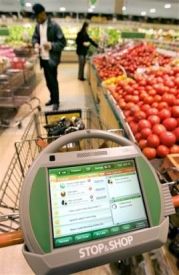
Now there is a new way to shop. IBM and Springboard Retail Networks are each working on their own version of a computerized shopping cart. The cart can guide you through the aisles using a GPS like map. It won’t count your calories, but it can ring you up, making the grocery store a one-stop hassle free encounter. You’ll never get lost looking for pickles again, the cart will take you to them, just like you were on a treasure hunt.

But, seeing as how it will cost a store 160,000 to get fully equipped with the smart shopping carts, I have a feeling we won’t be seeing them at Costco anytime soon.